VIP member
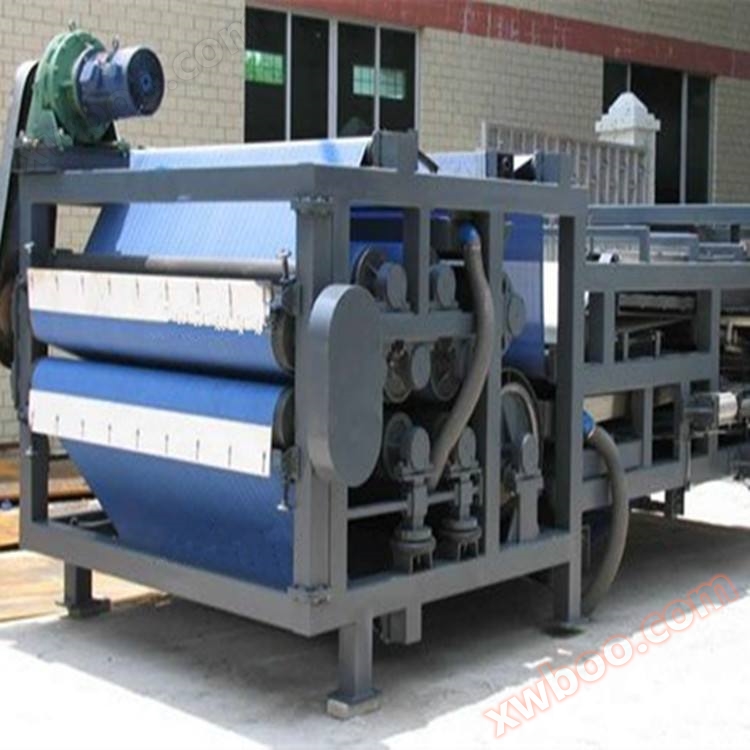
Vacuum filter press equipment
A vacuum filter is a device that uses vacuum negative pressure as a driving force to achieve solid-liquid separation.
Product details
One introduction
A vacuum filter is a device that uses vacuum negative pressure as a driving force to achieve solid-liquid separation. Under the action of vacuum negative pressure (0.04-0.07MPa), the liquid in the suspension is extracted through the filter medium (filter cloth), while the solid particles are intercepted by the medium, thus achieving the separation of liquid and solid. The filtering section is arranged along the horizontal length direction in the structure, which can continuously complete tasks such as filtering, washing, drying, and filter cloth regeneration.

II Scope of Application
Vacuum filter press equipment is widely used in solid-liquid separation in metallurgy, mining, chemical industry, papermaking, food, pharmaceuticals, environmental protection and other fields, especially in gypsum dehydration (FGD) in flue gas desulfurization, which has good applications.

III working principle
The basic principle of vacuum filtration is that under the action of vacuum negative pressure (0.04-0.07MPa), the liquid in the suspension is pumped out through the filter medium (filter cloth), while the solid particles are intercepted by the medium, thus achieving the separation of liquid and solid. The vacuum filter is an application of surface filtration mechanism. When the liquid in the suspension flows towards the filter medium, solid particles larger than or similar to the pore size of the filter medium will first form an initial layer on the surface of the medium in a bridging manner. The pores of the filter medium are larger than its pore channels, thus intercepting smaller particles. Therefore, the continuously deposited solid particles gradually form a filter cake with a certain thickness on the initial deposition layer.
(This content is provided by www.wushuichuli1.com)
Online inquiry
-
Contacts
-
Company
-
Telephone
-
Email
-
WeChat
-
Verification Code
-
Message Content
-