
VIP member
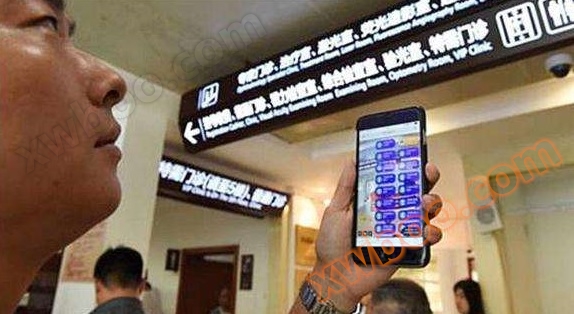
UWB personnel positioning system for maternal and child health hospitals and psychiatric hospitals
Introduction to Hospital Personnel Positioning System: Can Hospitals Install Personnel Positioning System? Why Do Hospitals Introduce Personnel Positi
Product details

Introduction to Hospital Personnel Positioning System
Can hospitals install personnel positioning systems? Why do hospitals need to introduce personnel positioning systems. Hospitals are places with very high foot traffic, and their management systems do not track patients' conditions in real time. Therefore, some hospitals, such as women's and children's hospitals, hospitals for elderly cadres, and hospitals for people with mental illness who cannot take care of themselves normally, are not monitored. It is very necessary to introduce positioning and navigation services.In the new guidance document for hospital informatization in our country, it is clearly stipulated that three types of Class A hospitals need to introduce navigation, positioning and other means to serve the elderly, children, and other patients who cannot take care of themselves.
The UWB positioning supervision system solution can achieve the positioning, tracking, and playback of movement routes for psychiatric patients and medical staff. Being able to respond quickly to events such as fights and attacks, and providing accurate location information, the attacked individuals, and the whereabouts of on-site personnel in a timely manner, greatly improves the efficiency and management level of handling unexpected situations. It can also locate children and the elderly in hospitals to prevent unexpected situations, which is of great significance for improving the level of medical services.
1 System Principles
1.1 Working principle
This solution utilizes UWB positioning wireless communication technology to transmit information to the collection server and implement various applications in the upper layer, thereby achieving functions such as identity recognition, positioning tracking, and trajectory query for psychiatric patients in hospitals. The system includesUWBpositioningEngine, UWB positioning base station, UWB positioning identification card, application platform.
UWB positioning wristband type identification card: worn by personnel in hospitals who need to be monitored, with a unique number, supporting UWB real-time positioning function, and able to achieve identity authentication, positioning tracking, and monitoring functions.
UWB positioning base station: mainly used to achieve full signal coverage in hospital monitoring areas, can receive information sent by cards, and upload the information to the positioning server.
Location server: processes the data uploaded by the base station to implement various applications in the upper layer.
Wearing for hospital psychiatric patientsUWBpositioningSmart wristband, using non removable wristbands, can monitor the position of personnel in real time, so as to grasp the number of personnel in real time. When patients leave or enter an illegal area without authorization, the system will alarm for timely processing. The system will also record the historical action trajectory of each mentally ill person for easy query and statistics.

2 System functions
2.1 Function Description
Personnel monitoring and management: Utilizing active UWB positioning and radio frequency identification technology to achieve personnel positioning, tracking and monitoring, and alarm management functions.
Regional management: Real time display of the number of people and personnel information in a certain area, and implementation of regional alarm management.
Alarm management: Display out of bounds alarms, distress alarms, wristband removal alarms, equipment failure alarms, etc.
Trajectory query: Historical trajectories, historical data reports, etc. can be queried and printed.
Vehicle management: Daily employee vehicle management, as well as route management for patient transportation vehicles, including vehicle entry and exit statistics, vehicle travel routes, trajectory tracking, and GPS linkage management for hospital outbound vehicles.
Video surveillance: Integrate existing video equipment in the psychiatric hospital, provide video viewing function, and provide video linkage function in case of alarm.
2.2 Application Functions
2.2.1 Real time personnel positioning
Personnel tracking and positioning are utilizedUWBpositioningTechnology, in response to the demand for regional management and monitoring of hospital personnel flow, the system can display real-time personnel location and status information based on the UWB tag information worn by patients, and can annotate on the map as needed.
2.2.2 Regional Management
Real time display of personnel distribution in the monitoring area, including their location and status. Display regional information and update information in real-time. Including querying regional historical information records.
Track and manage the location of designated cardholders, display their movement trajectory, and grasp their daily range of actions. For certain key prevention patients, the possibility of their escape can be determined, and necessary precautions can be taken in advance.
2.2.3 Trajectory recording and playback
The system can record the real-time movement trajectory of each patient and monitoring personnel, and provide query historical location record data. At the same time, the trajectory data of any mentally ill patient or guardian can be replayed on the map by time period (with or without trajectory, set playback speed, etc.).
2.2.4 Electronic fence
Real time positioning and abnormal alarm of patients can be achieved through electronic fences. General alarms can be classified into the following categories:
Timeout Alarm
Set the specified label to not stay in a designated area for more than the specified time, and if it exceeds the specified time, an alarm will be triggered. Patients can be limited in their stay time in designated areas to prevent dangerous situations from occurring.
Overstaffing alarm
Set an excessive number of personnel in certain specific areas, and if the number of personnel in the designated area exceeds the alert, an alarm will be immediately triggered. This function can timely determine the number of people gathering, remind medical staff to pay attention, and avoid accidents.
Cross border alarm
Set different permissions for certain key areas to prohibit entry and exit for different personnel. If unauthorized personnel illegally enter or leave the designated area, immediately report to the police and remind relevant personnel to take action.
Call for help and report to the police
Medical staff or patients wear wristbands with emergency buttons. In case of an emergency, they can press the alarm button, and the monitoring center positioning system will promptly receive the alarm information and location, and quickly locate the scene of the incident.
Wristband cutting alarm
The wristband card worn on the patient's hand requires specialized equipment to be removed. If the wristband is illegally dismantled or cut, the wristband label will continuously send illegal dismantling or cutting alarm messages to the same person.
Equipment malfunction alarm
The main purpose is to issue alarms for malfunctions of devices such as wristbands and base stations, such as signal loss, signal interruption, insufficient battery power, and equipment damage.
2.2.5 Patrol management
By setting patrol tasks, patrol task management can be carried out, including query, add, modify, and delete functions. The patrol management interface is shown in the following figure
2.2.6 Video linkage management
The video linkage function is achieved by binding the base station to the video monitoring equipment. When an alarm occurs, the system will promptly call the video monitoring equipment to face the event location and record the video information of the alarm location. Conversely, when the monitoring equipment detects suspicious situations in the monitoring area, the system will promptly call the intelligent management system to locate, analyze, and record personnel in the monitoring area.
2.2.7 Vehicle Monitoring and Management
Intelligent vehicle managementIncluding daily employee vehicle management, as well as route management for patient transportation vehicles.
Vehicle Information
By issuing cards to vehicles entering and exiting the hospital, vehicle information can be combined with the card to enable vehicles to enter and exit the hospital without stopping, determine the vehicle's location within the hospital, and real-time control the vehicle's location information, personnel information, and the vehicle's movement information within the hospital.
Route Management
Combined with GPS system, monitor the walking route of outbound vehicles, whether they follow the prescribed route, and real-time control the location and status information of outbound vehicles.
3. Cost analysis
hospitalPersonnel positioning systemThe main costs include UWB positioning base stations, UWB positioning wristbands, and positioning software systems, among which the software system may require opening the location data coordinate interface to the HIS system to provide navigation and positioning services. Therefore, the cost of base stations and terminals is a relatively large part, and the coverage of base stations can be based on the number of rooms, mainly covering open areas of 50m * 50m.
Bracelets can be reused because a disposable strap design can be used for hygiene and disinfection purposes.
Online inquiry
-
Contacts
-
Company
-
Telephone
-
Email
-
WeChat
-
Verification Code
-
Message Content
-