
VIP member
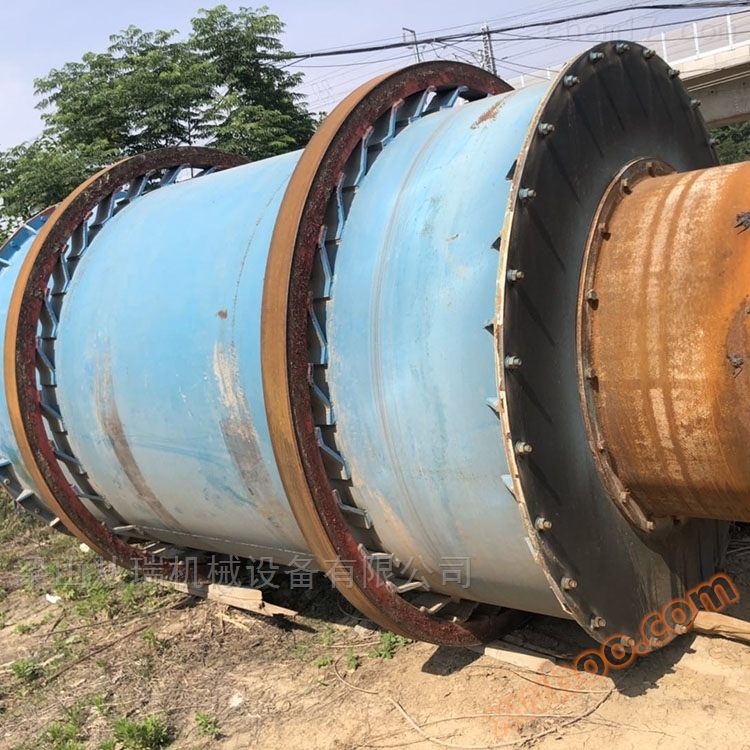
Supply of 10 ton second-hand sand dryer
Structure: 1. Cylinder body; 2. Front roller ring; 3. Rear roller ring; 4. Gear; 5. Roller blocking; 6. Dragging roller; 7. Small gear; 8. Discharge s
Product details
Structure of sand dryer:
1. Cylinder body; 2. Front roller ring; 3. Rear roller ring; 4. Gear; 5. Roller blocking; 6. Dragging roller; 7. Small gear; 8. Discharge section; 9. Yangban; 10. Gearbox; 11. Motor; 12. Hot air duct, 13, feeding chute; 14. Composed of furnace body and other parts. In addition, gas generators, combustion chambers or supporting elevators, belt conveyors, quantitative feeders, cyclone dust collectors, induced draft fans, etc. can be designed according to user needs. /Supply of 10 ton second-hand sand dryer
The river sand dryer, like other material dryers, is a professional equipment for drying moisture in materials. In recent years, most manufacturers have abandoned the traditional drying method in river sand production and adopted high-efficiency river sand dryers to improve the drying efficiency of river sand, meet market demand, and generate more economic benefits for enterprises. More and more manufacturers are using dryers to dry river sand, and their production efficiency is constantly improving. At the same time, when encountering corresponding equipment, manufacturers' measures to mess up the equipment are becoming more and more perfect. With the development of the river sand industry, the quality and technology of this type of dryer are constantly improving.
Recycling second-hand river sand drum dryer. Based on the drying problems encountered in actual production, the specific modification methods for the river sand dryer are as follows.
The machine is mainly composed of rotating body, lifting plate, transmission device, support device, sealing ring and other components.
The dryer is a cylinder slightly inclined from the horizontal direction, and the material is added from the higher end
The high-temperature flue gas and material flow into the cylinder, and as the cylinder rotates,
The material moves to the lower end due to the effect of gravity. A copying plate is installed on the inner wall of the cylinder,
Pick up and sprinkle the material to increase the contact surface between the material and the airflow,
To improve drying rate and promote material advancement. The dried product is collected from the bottom and lower part.
Our company provides a complete range of gear rings, motors, reducers, and accessories in stock, including 0.8 meters * 8 meters, 10 meters, 1 meter * 10 meters, 12 meters, 1.2 meters * 12 meters, 15 meters, 1.5 meters * 15 meters, 16 meters, 18 meters, 1.8 meters * 18 meters, 20 meters, 22 meters, 2 meters * 20 meters, 22 meters, 24 meters, etc. I have my own processing factory that can customize a brand new drum dryer according to user needs. The workmanship is exquisite, the quality is reliable, and there are professional technical personnel to guide the installation. Welcome new and old users to visit and see the products on site! Rattler drying machine is one of the traditional drying equipment, which is reliable in operation, has high flexibility in operation, strong adaptability, and large processing capacity. It is widely used in metallurgy, building materials, chemical industry, coal washing, fertilizer, ore, sand, clay, kaolin, sugar and other fields. The diameter is from Φ 1000 to Φ 4000, and the length is determined according to the drying requirements
In the center of a second-hand drum dryer, it is possible to avoid adding a dispersing mechanism. Wet materials entering the drying cylinder are repeatedly picked up and thrown off by the scraper on the drum wall, and are broken into small particles by the dispersing device during the falling process, greatly increasing the specific area and fully contacting and drying with hot air.
The second-hand drum dryer is widely applicable to alfalfa grass drying, alcohol lees drying, straw drying, sawdust drying, marigold drying, shaving drying, ginkgo leaf drying, Chinese herbal medicine drying, brewer's grains drying, Baijiu lees drying, potato starch residue drying, cassava residue drying, barley malt drying, melon seed drying, bagasse drying, hawthorn drying, rapeseed cake drying, vegetable drying, etc. The thermal efficiency is as high as 80%, significantly higher than similar domestic equipment.
A series of rules and regulations need to be established in the production and use of dryers to ensure the normal and orderly operation of the work and equipment.
The goal of manufacturers in formulating various maintenance regulations is to provide rules that staff must follow in daily operation and maintenance, which is the basic guarantee for using equipment well. The relevant regulations on maintenance can be explained from four points
Point: What tasks do dryer equipment need to do in daily operation and maintenance. The detailed content includes checking the equipment before going to work, with an important check being whether it is necessary to refuel the dryer. The specific operations during the shift must be strictly carried out in accordance with relevant regulations. After work, the cleaning work includes not only cleaning the dryer workshop, but also cleaning the equipment. The last item is to keep a record of the shift handover.
The second point is how the staff maintain the equipment during the operation of the dryer, and the technical requirements must be correctly carried out, such as the lubrication of the dryer. /Supply of 10 ton second-hand sand dryer
Thirdly, regarding regional maintenance management, reference should be made to corresponding specialized group management and the implementation of relevant economic indicators.
Regular equipment technical inspections are conducted for the daily use of second-hand sand dryers, specifying inspection items, how to inspect, who performs, inspection period, etc.
Online inquiry
-
Contacts
-
Company
-
Telephone
-
Email
-
WeChat
-
Verification Code
-
Message Content
-