VIP member
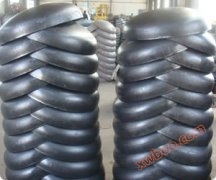
Steel plate cap
Steel plate cap, steel cap, carbon steel national standard cap, carbon steel American standard cap, other names: head, plug, cap, pipe cover, blind he
Product details
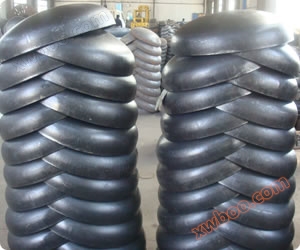
Steel plate cap, steel cap, carbon steel national standard cap, carbon steel American standard cap
Pipe cap, other names: head, plug, cap, pipe cover, blind head. Purpose: Welding on the pipe end or installing on the external thread of the pipe end to cover the pipe fittings. Used to seal pipelines, with the same function as pipe plugs.
The pipe cap includes the design of convex pipe cap, conical shell, variable diameter section, flat cover and tight mouth.
Convex pipe caps include hemispherical pipe caps, elliptical pipe caps, disc-shaped pipe caps, and spherical cap shaped pipe caps. From the perspective of force, the hemispherical cap in the convex cap is gradually becoming less desirable, but from the perspective of manufacturing difficulty, it is gradually becoming easier to manufacture.
Pipe cap parameters:
Stainless steel, alloy steel, carbon steel
Diameter: DN15-DN1200
Wall thickness: SCH5-SCH160
Standard: ASME DIN JIS BS GB/T JB SH HG,
as follows: GB/T12459,GB/T13401,ASME B16.9,SH3408, SH3409,HG/T21635,DL/T695,SY/T0510, DIN2617
Usage: Water, beverages, beer, food, petrochemicals, nuclear power, machinery, medical equipment, fertilizers, shipbuilding, waterproofing treatment, pipelines, etc
Packaging: Wooden crate, cardboard box Service: Provide technical consultation, guidance on installation, etc. Avoid splicing at the r position of the disc-shaped pipe cap, which may cause thinning and high stress.
The welding seam direction during splicing is only allowed to be radial and circumferential. In the future, this requirement may be cancelled for large pipe caps. The distance of splicing should be required to be greater than 3 δ and not less than 100mm (the welding heat affected zone is a high stress zone where the chemical composition may be burned). So it is necessary to avoid high stress areas, which are related to thickness. According to practical experience, the stress attenuation length is greater than 3 δ and not less than 100mm. But refrigeration equipment is difficult to meet this requirement and has its own particularities. The welded joints of the spliced heads should undergo 100% radiographic or ultrasonic testing, and the qualification level should follow the equipment shell. The final formed weld seam inspection level and proportion are the same as the equipment shell, resulting in high waste. head
For example, if the device casing undergoes a 20% inspection and passes Level III. The butt joint weld and the final weld are also III qualified, with a welding joint coefficient of 0.85;
If the device casing is 100% inspected and meets the II standard. The weld seam of the blind joint and the final weld seam are also II qualified, with a welding joint coefficient of 1. Therefore, although the blind joint is 100% inspected, the qualification level is different and follows the equipment shell.
But attention should be paid to the manufacturing process:
The correct approach is: cutting (marking) - assembling small boards into large boards - forming - non-destructive testing
If testing is done before molding, it is incorrect and cannot guarantee that it will still be qualified after molding. That is to say, non-destructive testing refers to the final non-destructive testing.
Our company specializes in the production and sales of various stainless steel, carbon steel stamped elbows, flanges, tees, reducers, and other reducing pipe fittings. A professional manufacturer of non-standard flanges. All kinds of pipe fittings and flanges are produced according to national standards, and the quality meets the national technical inspection standards. They are widely used in engineering pipeline systems such as building fire protection and drainage, chemical, petroleum, power plants, boilers, pressure vessels, etc. The company has advanced equipment and strong capabilities, with 360 employees and an area of 100000 square meters. We have a history of over 20 years in the research and development of series products such as forged flanges and stamped pipe fittings, as well as the development of new products.
Online inquiry
-
Contacts
-
Company
-
Telephone
-
Email
-
WeChat
-
Verification Code
-
Message Content
-