
VIP member
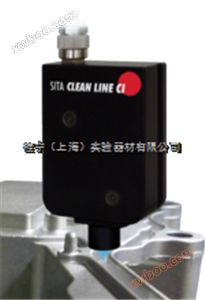
Sita online cleanliness meter
Application areas: Detection of residues such as grease, cleaning agents, and coolant on the surface of metal and automotive parts. SITA online cleanl
Product details
Scanning surface cleanliness test
The fluorescence detection technology of SITA scanning cleanliness analyzer can greatly monitor and optimize the cleaning process. For example, slight contamination of oil, grease, coolant, demoulding wax, or surfactants can lead to surface defects in subsequent processes, thereby increasing costs. Regular inspection of the surface of the parts can ensure the required level of cleanliness. If the cleanliness decreases, further actions can be taken such as immediately replenishing cleaning agents or maintaining the cleaning tank.
Online Cleanliness Meter - Measurement Principle
Typical pollutants in industrial production processes, such as oil, grease, or surfactants, can be excited by ultraviolet light. The fluorescence radiation intensity after excitation will increase with the thickness of the pollutant.
An integrated UV-LED in the scanning cleanliness meter emits ultraviolet light to excite the fluorescence of pollutants, and the instrument's photodiode measures the intensity of fluorescence. The calibration of cleanliness is based on the reference sample being calibrated to be 100% clean.
Develop reliable cleanliness values based on the cleanliness of samples known to cause surface defects.

scanning mode
The SITA scanning cleanliness meter is flexible and can be customized according to customer requirements. It can be used for component testing in industries such as automotive and steel, and even for small parts in medical technology.
linear scanning

Use one or more scanning cleanliness meter sensors to continuously test the cleanliness of strip flat samples.
Surface scanning

Use an X-Y positioning drive device to detect the cleanliness of the sample surface.
Free mode scanning

Measure the cleanliness of the sample surface using a 3D positioning system.
Online Cleanliness Meter - Operating Conditions
Relative humidity: up to 70%
Environmental temperature: 10-50 ℃
Online Cleanliness Meter - Product Advantages
1. Continuous and non-contact measurement of sample surface contamination (cleanliness)
2. Avoid problems during coating, bonding, welding, printing, or hardening processes
3. Directly displayed cleanliness level
Online Cleanliness Meter - Application Fields
After cleaning, metal components in industries such as automobiles, semiconductors, electronics, and healthcare can be quickly, accurately, and comprehensively measured using an online scanning cleanliness meter to improve the yield of the next process. And provide quantitative indicators for optimizing the cleaning process.
Online Cleanliness Meter - Practical Case: Testing Steel Strip
The steel strip before coating requires high cleanliness, and the SITA scanning cleanliness meter can continuously measure and even detect minimal contamination.
When the cleanliness value is below the limit value, the cleaning process can be immediately interrupted.

Online Cleanliness Meter - Sensor
Shell: anodized aluminum IP51
Interface: RS-485/bus or PTP
Measurement value: Cleanliness or relative fluorescence is related to SITA fluorescence standard
Measurement speed: 100 points/second per measurement, 100Hz/s
Surface velocity: maximum height 10m/s
Dimensions (W * H * D): 50 * 95 * 30mm
Weight: 200g
Measurement value - cleanliness percentage
Measurement range: 0 to 100% cleanliness (100% is the sample standard calibrated to achieve ideal cleanliness)
Resolution: 0.1%
Measurement Value - Cleanliness Fluorescence
Measurement point diameter: 1mm
Measurement distance: 4mm
Excitation wavelength: 365nm
Wavelength measurement: 460nm
Measurement range: 0... 1000 RFU (relevant fluorescent units), SITA fluorescence standard N1=100 RFU
Measurement error: The largest measurement range is 0.5%
Resolution: 0.1RFU
Online inquiry
-
Contacts
-
Company
-
Telephone
-
Email
-
WeChat
-
Verification Code
-
Message Content
-