
VIP member
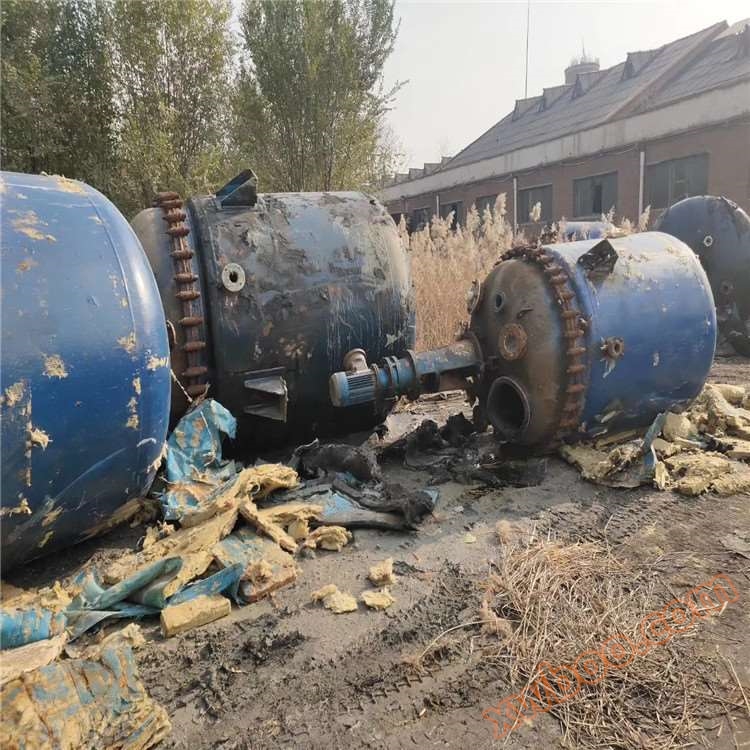
Second hand reactor supply market
The second-hand reaction kettle supply market refers to a stainless steel container with physical or chemical reactions. The structural design and par
Product details
Second hand reactor supply market
Second hand reactor supply marketThe broad understanding of a reaction kettle is a stainless steel container with physical or chemical reactions. The structural design and parameter configuration of the container are carried out according to different process conditions. The design conditions, process, inspection, manufacturing, and acceptance need to be based on relevant technical standards to achieve the heating, evaporation, cooling, and low-speed mixing reaction functions required by the process. Pressure vessels must comply with the GB150 {Steel Pressure Vessels} standard, and atmospheric pressure vessels must comply with the NB/T47003.1-2009 {Steel Welded Atmospheric Pressure Vessels} standard. The pressure requirements during the reaction process also vary in terms of the design requirements for the container. Production must strictly follow the corresponding standards for processing, testing, and trial operation. Stainless steel reaction vessels vary according to different production processes, operating conditions, etc. The design structure and parameters of reaction vessels are different, that is, the structural style of reaction vessels is different, and they belong to non-standard container equipment.

A reaction vessel is a comprehensive reaction vessel, and the design of the structure, function, and configuration accessories of the reaction vessel is based on the reaction conditions. From the beginning of the feeding reaction discharging process, the pre-set reaction steps can be completed with a high degree of automation, and important parameters such as temperature, pressure, mechanical control (stirring, blowing, etc.), and reactant/product concentration during the reaction process can be strictly regulated. Its structure generally consists of a kettle body, transmission device, stirring device, heating device, cooling device, and sealing device. Corresponding auxiliary equipment: fractionation column, condenser, water separator, collection tank, filter, etc.
Online inquiry
-
Contacts
-
Company
-
Telephone
-
Email
-
WeChat
-
Verification Code
-
Message Content
-