
VIP member
SSI Universal Animal Respiratory Metabolism Measurement System
SSI Universal Animal Respiratory Metabolism Measurement System
Product details
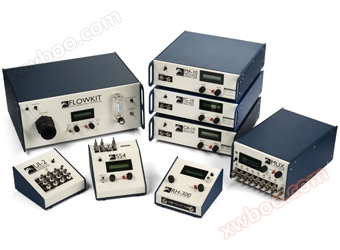
 SSIThe animal respiratory metabolism measurement system is used to accurately measure the respiratory metabolism of various animals, including exhaled carbon dioxide, oxygen consumption, water vapor, etc., and can calculate respiratory quotient. It is widely used in research related to respiratory metabolism of insects, reptiles, rodents, and other terrestrial vertebrates and invertebrates, such as genetics, medical experiments, pest control, preventive medicine research experiments, animal physiological ecology, ecotoxicology, animal nutrition, etc. The system consists of a carbon dioxide analyzer, an oxygen analyzer, a multi-channel gas path converter, an airflow controller, a data collector and program software, a breathing chamber, etc. Single channel to 8-channel (capable of measuring respiratory metabolism of 7 animals simultaneously, with the other channel being the baseline channel) or even more channel measurement systems can be customized based on research content and budget, or CO can be measured simultaneously2、O2、 RQ and H2O, Alternatively, only CO measurement can be selected according to requirements2Or O2The measurement system.
Main functional features:
1.Modular structure with high scalability and diverse configuration solutions:
a)Optional single channel system or multi-channel system
b)Only CO2 analyzer or O2 analyzer can be selected, and CO2 analyzer, O2 analyzer, H2O analyzer, CH4 analyzer, etc. can also be selected simultaneously
c)Real time open respiratory metabolism measurement of small animals such as aphids, mosquitoes, soil animals, etc. can be achieved by selecting high-precision differential O2 analyzers and high-precision CO2 analyzers, as well as high-precision low range gas sampling control units
d)Respiratory metabolism measurement can be performed on medium and large animals by selecting a high range (up to 2000L/min) gas flow control and sampling system
e)Optional temperature control system can be used to measure the respiratory metabolism of animals, especially those with variable temperature, under different temperature conditions, and calculate Q10
f)Optional gas control system to regulate and control the concentration of O2 or CO2 entering the breathing chamber
g)Different types of activity monitoring units can be optionally selected to synchronously monitor animal activities and analyze the relationship between animal activities and respiratory metabolism
2.High precision and sensitivity, it is currently the most widely published professional instrument for animal respiratory metabolism in the international academic community
3.High precision CO2 analyzer and O2 analyzer, temperature and pressure compensation, resolution up to 1ppm; Optional methane analyzer and water vapor analyzer
4.The respiratory metabolism measurement of small animals such as fruit flies can be optionally equipped with FC-2 differential O2 analyzer and Li7000 CO2 analyzer
5.According to experimental research requirements, closed or open measurements can be conducted, or push or suction modes can be used
6.For the respiratory metabolism of ectothermic animals such as insects and reptiles, a temperature regulation system can be optionally equipped
7.Long term respiratory metabolism monitoring in rats and mice (continuous for multiple days) with optional metabolic cages
8.Livestock and poultry respiratory metabolism can be equipped with an optional animal 3D activity monitoring module to monitor animal activity intensity, activity rhythm, rumination behavior frequency, etc. in real time
9.Optional temperature and rhythm monitoring (see DST implantable animal temperature/rhythm recorder later)
10.Animal Behavior Observation and Analysis Unit (optional): Based on the contrast method, which requires a clear color contrast between the target animal and the surrounding environment, AVI video data is analyzed, including: behavior analysis of a single target animal in a given area such as an open field, behavior analysis of multiple target animals in porous plates in rooms 1-24 (one animal per room), animal pairing analysis (such as distance between two animals, etc.), target animal trend analysis (such as tracking observation records and analyzing their directional behavior by marking the head and tail), and tracking observation analysis of multiple target animals in a given area. Observable analysis:

a)Animal activity time and non activity time
b)Animal activity speed and acceleration
c)Animal movement direction
d)Animal movement distance
e)Direction and Trend
f)Animal rotational angular velocity
g)The duration of stay in a certain area
h)The frequency of entry and exit to a certain area
i)POI(Point of interest) Contact frequency
Application case:

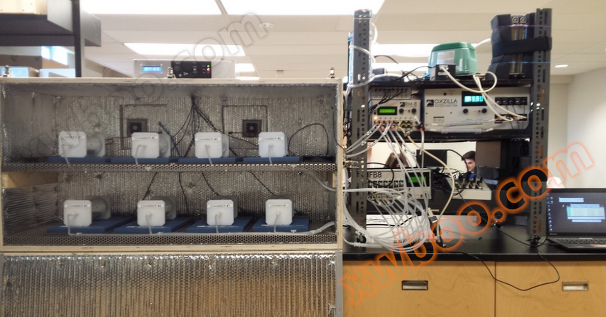
MollIn 2012, the SSI animal respiratory metabolism measurement system (configuration shown in the figure on the right) was used to study the energy metabolism of leaf transport by leaf cutting ants. The research results can be found in: The energetics of running stability: costs of transport in grass-cutting ants depend on fragment shape. The Journal of Experimental Biology 215, 161-168
SinclairIn 2013, a single channel SSI animal respiratory metabolism measurement system (equipped with CA-10 carbon dioxide analyzer, BL-2 baseline unit, SS-3 gas sampling unit, AD-1 activity recording unit, TC2000 temperature monitoring unit, UI-2 data acquisition system, etc.) was used to study the winter energy consumption of forest frogs. The research results can be found in: Real-time measurement of metabolic rate during freezing and thawing of the wood frog, Rana sylvatica: implications for overwinter energy use. The Journal of Experimental Biology 216, 292-302.
Welch JrIn 2011, a study was conducted on the energy metabolism of hummingbirds using a feeding hood as a breathing chamber (system configuration including feeding hood, CA-10 carbon dioxide analyzer, FC-10 oxygen analyzer, SS-3 gas sampling unit, UI-2 data acquisition system, etc., as shown in the figure below). The research results can be found in: The power of feeder-mask respirometry as a method for examining hummingbird energetics. Comparative Biochemistry and Physiology. Part A 158, 276-286.

Online inquiry
-
Contacts
-
Company
-
Telephone
-
Email
-
WeChat
-
Verification Code
-
Message Content
-