
VIP member
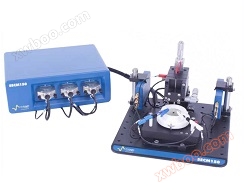
SECM150 Compact Scanning Electrochemical Microscope
SECM is a probe based on microscopy technology, and the measured image contrast can display the local electrochemical activity of the studied surface
Product details
SECM is a probe based on microscopy technology, and the measured image contrast can display the local electrochemical activity of the studied surface. Traditional electrochemical testing obtains the average signal of the entire sample surface, while usingSECMElectrochemical properties can be spatially decomposed to obtain local characteristics of the sample. Local characteristics can serve as supplementary information to help users interpret global measurement results.
Bio Logic's Scanning Electrochemical WorkstationM370andM470It is a comprehensive micro electrochemical workstation that includesSECMmodular. among whichM470It includes a total of9Each module is a scanning electrochemical microscopy system(SECM)Communication Scanning Electrochemical Microscopy System(ac-SECM)Intermittent contact scanning electrochemical microscopy system(ic-SECM)Micro area electrochemical impedance testing system(LEIS)Scanning vibration electrode testing system(Council)Electrolyte droplet scanning system(SDS)Communication electrolyte droplet scanning system(ac-SDS)Scanning Kelvin probe testing system(SKP)Non touch micro area morphology testing system(OSP). Compared toM470,SECM150是一款新的便携式的、入门级的SECMEquipment.

image1 SECM150Compact Scanning Electrochemical Microscope
1SECMIntroduction
SECM 150 is a low-priced and high-resolution product10 nm)A scanning system with a small volume is particularly suitable for glove box work due to its small size. The piezoelectric locator is equipped with a capacitive position sensor, which can provide information throughout the entire scanning range10nmThe resolution. The integrated dual potentiostat can measure ultra-low current with a resolution of up to6.1 fA.
(1)So compact, suitable for glove boxes!
The laboratory space is often limited, especially when strict air atmosphere control is required for experiments, and there are also strict requirements for the volume and size of experimental instruments.SECM150The design is as compact as possible while maintaining high performance. Its weight is only8kgIts size is suitable for environments as small as glove boxes. for example,PU51The potentiostat only has10cmLong,61gHeavy. The size of its scanning table is only190*225*230mm.SECM150It is currently the smallest in size on the marketSECMEquipment.
(2)Ultra high resolution<10nmScanning resolution
The probe position of SECM150 is determined by3Controlled by a piezoelectric scanning platform, the scanning range is200*200*100μmThe position resolution on each coordinate axis is lower than10nm.Bio-Logic PtThere are many different sizes of ultrafine probes, with the smallest being1μmButSECM150Smaller probes that can be applied to any material. Constant potential meter has high sensitivity in current range100pA, Resolution6.1fA.SECM150The ultra-high resolution can almost meet all needsSECMTesting.
(3)Quick Scan
SECM150During the testing process, the maximum scanning rate is per second20A discrete point. This rapid scanning instrument can be used to study time variable systems. Its maximum scanning rate is200Mm/sFor example, the picture2Middle for18minInternally measured10000Point by point data.

image2 Test results of gold sample in potassium ferrocyanide solution
IISECM150The application
SECM150Widely applicable, it can be used to study electrochemical reactions on material surfaces. Here are some application cases:
(1)Battery
Lithium ion battery:LiCoO2Decomposition of paste electrodesLi+的空间异质性。
Lithium ion batteries: Formation and evolution of solid electrolyte interfaces under operating conditions.
Lithium ion batteries: Study on the uniformity of insulation performance of separators.
Lithium air battery: The mass transfer resistance of oxygen on the gas diffusion electrode is determined by collecting oxygen through the probe tip.
Redox flow battery: research on current collector passivation.
(2)Corrosion/coating
Measure the electrochemical properties of particles and phases in metal alloys (inclusions, intermetallic compound particles, grain boundaries, grains).
Study the local corrosion mechanism of metal alloys.
The evolution of uniformity of specific anti-corrosion treatment protection.
(3)Fuel Cells and Photocatalysis
The spatially resolved catalytic performance of catalysts.
Catalyst composition screening.
(4)Biosensors
Test the reactivity of receptors to specific molecules produced by probes.
Use probe immobilization techniques to test locally generated molecules.
(5)Basic electrochemistry
Study on the distribution of electron transfer on conductive substrates.
Online inquiry
-
Contacts
-
Company
-
Telephone
-
Email
-
WeChat
-
Verification Code
-
Message Content
-