
VIP member
Product details

Equipment principle
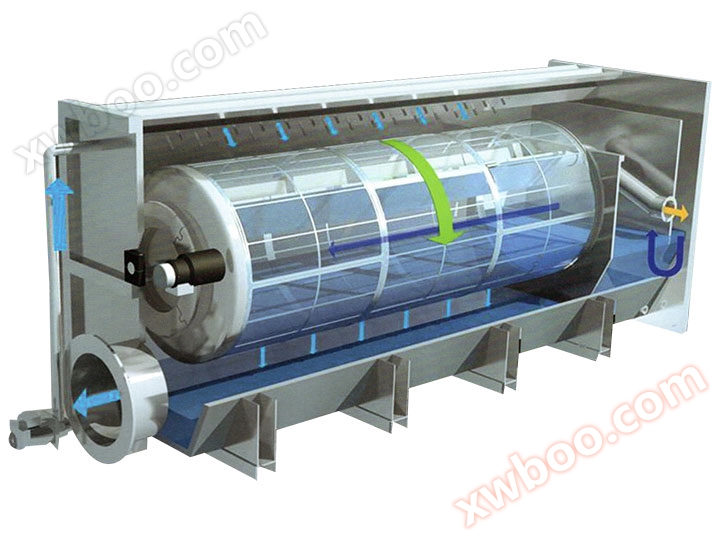
The rotary drum precision filter consists of equipment structure module, filtration module, drive system, backwash system, and automatic control system.
After the sewage enters the equipment, the automatic control system starts the drive system to drive the drum to rotate, and at the same time starts the backwash system. Under the action of gravity, sewage flows out from the inside to the outside of the drum, and suspended solids in the water are trapped in the drum by the filter screen. The drum rotates slowly, and the backwash water pump extracts filtered water to backwash the filter screen. The washed dirt falls into the collection tank inside the drum and is discharged outside the equipment through the sewage pipe.
When sewage enters the equipment, the drive system and backwash system operate continuously without interruption.

Equipment Composition
The rotary drum precision filter consists of equipment structure module, filtration module, drive system, backwash system, and automatic control system.
After the sewage enters the equipment, the automatic control system starts the drive system to drive the drum to rotate, and at the same time starts the backwash system. Under the action of gravity, sewage flows out from the inside to the outside of the drum, and suspended solids in the water are trapped in the drum by the filter screen. The drum rotates slowly, and the backwash water pump extracts filtered water to backwash the filter screen. The washed dirt falls into the collection tank inside the drum and is discharged outside the equipment through the sewage pipe.
When sewage enters the equipment, the drive system and backwash system operate continuously without interruption.
Equipment Composition

① Equipment structure module
The equipment structure module consists of the equipment body and the drum, and is made of 304L stainless steel (optional 316L). |

② Filtering module
The filtration module consists of several independent and detachable filter screens, which are made of 316L stainless steel wire with a diameter of micrometers through special processes (different precision filters are selected according to the incoming water quality, and imported and domestic filters are also provided). |
|

③ Drive system
The drive system consists of a reduction motor, transmission shaft, central bearing, etc. |
④ Backwash system
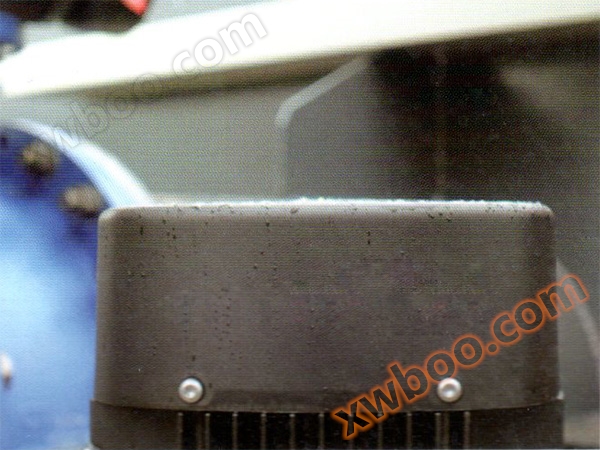
The backwash system consists of backwash water pump, pipeline, backwash water filter, nozzle, collection tank, and sewage pipe. |
|

⑤ Control system
The equipment adopts a PLC automatic control system. The PLC control system is installed in the electrical control cabinet and can communicate with the central control room in the factory through networking. |
Equipment advantages
Quality is a fundamental requirement. In every practice, facing different water quality and treatment difficulties, we have developed filter screens suitable for different incoming water, improved the detailed structure of the equipment, and committed to the two goals of "meeting effluent standards" and "customer friendliness". We also constantly challenge other long maintenance cycles to reduce customer usage costs.

1. Oil free lubricated bearings at the inlet end. During the working process, the loss of solid lubricant is minimal, and it can be self replenished. It has a high load-bearing capacity and, when combined with a water cooling system, can completely solve tile burning.
|
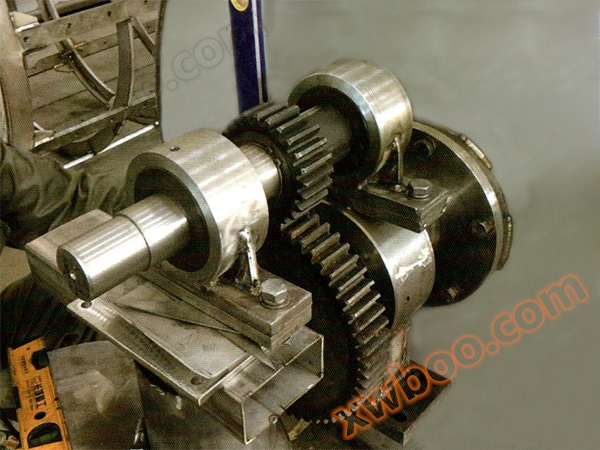
2. Gear set transmission structure at the outlet end. There is no problem of unstable chain transmission, and the maintenance cycle is long.
|
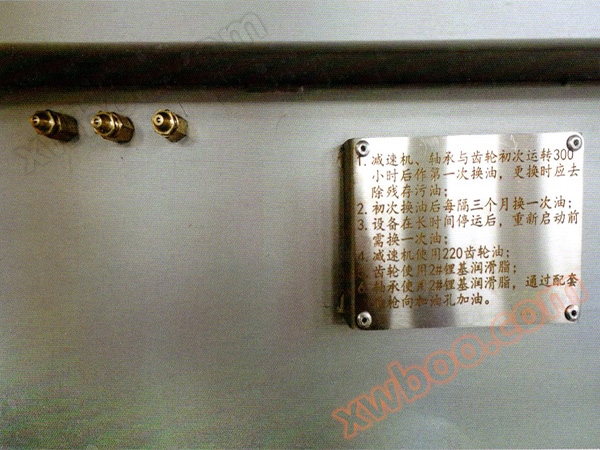
3. Oil filling structure for the bearing at the outlet end. External refueling structure eliminates the need for operators to enter the interior of the machine compartment, reducing maintenance difficulty and improving user usability.
|
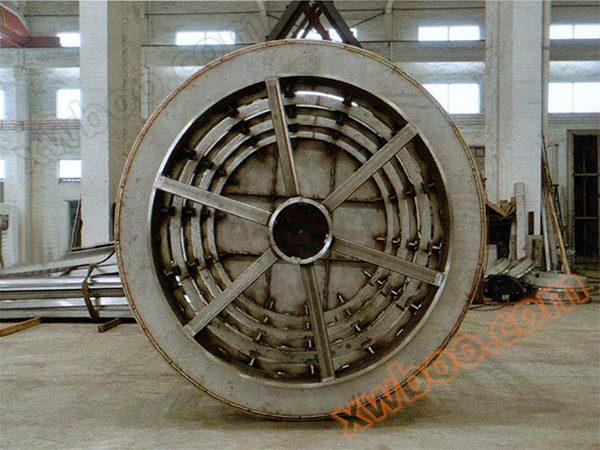
4. A drum with concentric ends, precision coaxiality processing, and repeated dynamic balancing correction. Intended to prevent the common problem of drum deformation after years of operation on the market.
|
|||

5. Based on rich on-site experience, filter screens with different accuracies. At the same time, it has achieved three core indicators of the filter: high precision, long lifespan, and no degradation in processing capacity.
|
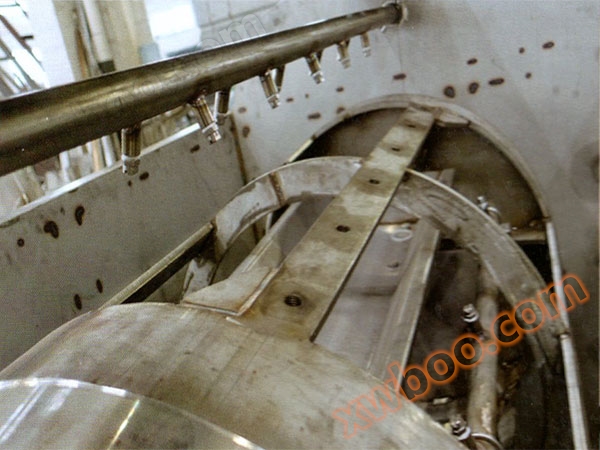
6. Backwash nozzle system for external main and internal auxiliary. Even in the face of excessive dosing or high SS inlet water, it can operate stably, expanding the range of inlet water quality of the equipment and extending the maintenance cycle of the filter screen.
|

7. Humanized electronic control logic. Based on on-site experience, we have added some user-friendly settings, such as linking the water level gauge in the inlet chamber with the bypass solenoid valve. When the water level in the inlet chamber is too high, it indicates a decrease in the network capacity of the filter. At this time, the bypass valve will automatically open to reduce the risk of filter damage.
|
||||
In sales and after-sales service
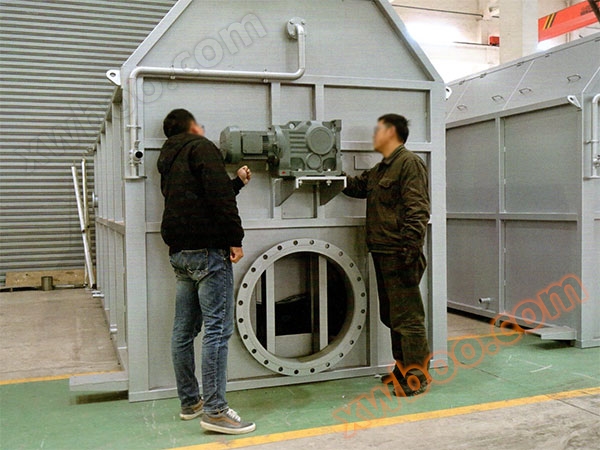
Tailored according to the on-site situation and characteristics of the user
|

Establish a 'Maintenance Record' for each device that leaves the factory, and conduct quarterly telephone follow ups
|
core technology
The current GB18918-2002 "Pollutant Discharge Standards for Urban Wastewater Treatment Plants" in China sets three levels of standards for the effluent quality of urban wastewater treatment plants, with the first level standard divided into A standard and B standard.
The "12th Five Year Plan for the Construction of National Urban Sewage Treatment and Recycling Facilities" proposes that during the 12th Five Year Plan period, the investment in the construction of urban sewage treatment and recycling facilities in China will be nearly 430 billion yuan. Most sewage treatment plants need to undergo process upgrades, upgrading from Level B to Level A.
| model | Basic control items | primary standard | secondary standard | Level 3 standard | ||
| A standard | B standard | |||||
| 1 | Chemical Oxygen Demand (COD) | 50 | 60 | 100 | 120 | |
| 2 | Biochemical Oxygen Demand (BOD5) | 10 | 20 | 30 | 60 | |
| 3 | Suspended solids (SS) | 10 | 20 | 30 | 50 | |
| 4 | animal and vegetable oils | 1 | 3 | 5 | 20 | |
| 5 | petroleum | 1 | 3 | 5 | 15 | |
| 6 | Anionic surfactant | 0.5 | 1 | 2 | 5 | |
| 7 | Total nitrogen (calculated as N) | 15 | 20 | — | — | |
| 8 | Ammonia (calculated as N) | 5(8) | 8(15) | 25(30) | — | |
| 9 | total phosphorus (Calculated by P) |
Built before December 31, 2005 | 1 | 1.5 | 3 | 5 |
| Built from January 1st, 2006 | 0.5 | 1 | 3 | 5 | ||
| 10 | Chromaticity (dilution factor) | 30 | 30 | 40 | 50 | |
| 11 | ph value | 6~9 | ||||
| 12 | Fecal coliform bacteria count/(individuals/L) | 103 | 104 | 104 | — | |
From the table data, it can be seen that the first level B has been increased to the first level A, and the high allowable emission concentration of SS has been reduced from 20mg/L to 10mg/L. This is the main field that rotary drum precision filters are designed to address.

Based on our experience with municipal wastewater, the SS in municipal wastewater effluent generally exhibits two characteristics: "large quantity" and "small particle size", which requires a small pore size for the filtration accuracy of the filter screen.
A small aperture can only ensure interception rate, and in later operation, it is necessary to achieve a long lifespan (strength requirements) and no flux attenuation (easy backwashing).
A small aperture can only ensure interception rate, and in later operation, it is necessary to achieve a long lifespan (strength requirements) and no flux attenuation (easy backwashing).

Microscopic image of filter screen
|

The relationship between SS particle size and removal rate corresponding to this network
|
Our company uses a filter screen for municipal sewage upgrading, with a pore size of 26 μ m, a mesh thickness of 0.15mm, a weight of 0.26g per square inch, an effective area of 29%, and good performance parameters to ensure interception rate and operational quality to a large extent.
Selection parameter table
| model | HWL-3000 | HWL-5000 | HWL-10000 | HWL-15000 | HWL-20000 | HWL-25000 | HWL-30000 |
| Processing capacity (m)3/d) | 3000 | 5000 | 10000 | 15000 | 20000 | 25000 | 30000 |
| Dimensions (mm) | 2900×1220 ×1470 |
2900×1600 ×2060 |
3800×1600 ×2220 |
4700×1600 ×2220 |
5600×1600 ×2220 |
5600×1760 ×2500 |
6500×1760 ×2500 |
| Filter area (m)2) | 1.5 | 2.5 | 5 | 7.5 | 10 | 12 | 15 |
| Outlet Diameter | DN200 | DN300 | DN500 | DN500 | DN600 | DN700 | DN700 |
| Reduction motor power (KW) | 0.55 | 0.55 | 0.75 | 1.1 | 1.5 | 1.5 | 1.5 |
| Backwash pump power (KW) | 1.1 | 1.1 | 2.2 | 3 | 4 | 4 | 5.5 |
| Backwash water consumption (m)3/d) | 20 | 20 | 40 | 60 | 80 | 80 | 100 |
| Backwash pressure (bar) | 7.5 | 7.5 | 7.5 | 7.5 | 7.5 | 7.5 | 7.5 |
application area
Municipal sewage upgrading, circulating cooling water filtration, reclaimed water reuse, river treatment, aquaculture.
Municipal sewage upgrading, circulating cooling water filtration, reclaimed water reuse, river treatment, aquaculture.
Online inquiry
-
Contacts
-
Company
-
Telephone
-
Email
-
WeChat
-
Verification Code
-
Message Content
-