
VIP member
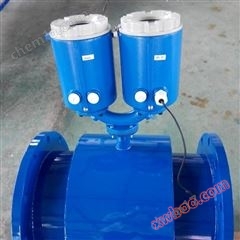
KH/LDE intelligent flowmeter manufacturer, intelligent flowmeter selection/electromagnetic flowmeter
Brief description: KH-LDE electromagnetic flowmeter is an induction instrument that measures the volume flow rate of conductive medium inside a tube b
Product details
KH-LDEIntelligent electromagnetic flowmeterDetailed information:
KH-LDE electromagnetic flowmeterIt is an induction instrument that measures the volume flow rate of conductive medium inside a tube based on Faraday's law of electromagnetic induction. It adopts embedded technology of single-chip microcomputer to achieve digital excitation, and at the same time, CAN fieldbus is used on the electromagnetic flowmeter, which belongs to the domestic * and the technology has reached the domestic level.KH-LDE intelligent electromagnetic flowmeterWhile meeting on-site display requirements, it can also output 4-20mA current signals for recording, regulation, and control purposes. It has been widely used in industrial technology and management departments such as chemical, environmental protection, metallurgy, pharmaceuticals, papermaking, and water supply and drainage. KH-LDE electromagnetic flowmeter can not only measure the flow rate of general conductive liquids, but also measure the volumetric flow rate of liquid-solid two-phase flow, high viscosity liquid flow, and salt, strong acid, and strong alkali liquids.Intelligent flowmeter manufacturer, intelligent flowmeter selection/electromagnetic flowmeter
Performance characteristics of electromagnetic flowmeter:
The instrument structure is simple, reliable, without moving parts, and has a long working life.
There are no flow blocking components, and there is no pressure loss or fluid blockage.
◆ No mechanical inertia, fast response, good stability, can be applied to automatic detection, adjustment, and program control systems.Intelligent flowmeter manufacturer, intelligent flowmeter selection/electromagnetic flowmeter
The measurement accuracy is not affected by the type of measured medium and its physical parameters such as temperature, viscosity, density, pressure, etc.
◆ Different combinations of PTFE or rubber lining and electrode materials such as Hc, Hb, 316L, Ti can adapt to the needs of different media.
There are various flow meter models available, including pipeline type and plug-in type.
Using EEPROM memory, the storage of measurement and operation data ensures safety and reliability.
◆ It has two types: integrated and separated.
High definition LCD backlit display.
Technical parameters of electromagnetic flowmeter:
Instrument accuracy: pipeline type 0.5 level, 1.0 level; Insertion type 2.5 level
Measurement medium: various liquid and liquid-solid two-phase fluids with conductivity greater than 5 μ S/cm.
Flow velocity range: 0.2-8m/s
Work pressure: 1.6MPa
◆ Environmental temperature: -40 ℃ to+50 ℃
◆ Medium temperature: PTFE lining ≤ 180 ℃
Rubber material lining ≤ 65 ℃
Explosion proof mark: Exmibd Ⅱ BT4
External magnetic interference: ≤ 400A/m
◆ Shell protection: Integrated type: IP65;
Detached type: Sensor IP68 (5 meters underwater, limited to rubber lining)
Converter IP65
Output signal: 4-20mA.DC, load resistance 0-750 Ω
Communication output: RS485 or CAN bus
◆ Electrical connection: M20 × 1.5 internal thread, φ 10 cable hole
Power supply voltage: 90-220V AC, 24 ± 10% V.DC
◆ High power consumption: ≤ 10VA
Selection of electromagnetic flowmeter instruments:
◆ Range confirmation
The flow rate of the medium measured by the general industrial electromagnetic flowmeter should be 2-4m/s. In special circumstances, the low flow rate should not be less than 0.2m/s, and the high flow rate should not exceed 8m/s. If the medium contains solid particles, the commonly used flow rate should be less than 3m/s to prevent excessive friction between the lining and the electrode; For viscous fluids, the flow velocity can be chosen to be greater than 2m/s. A higher flow velocity helps to automatically eliminate the effect of viscous substances attached to the electrode, which is beneficial for improving measurement accuracy.
Under the condition that the range Q has been determined, the size of the flowmeter diameter D can be determined based on the range of flow velocity V mentioned above, and its value can be calculated by the following formula:
Q=πD²V/4
Q: Flow rate (㎡/h) D: Inner diameter of pipeline V: Flow rate (m/h)
The range Q of the electromagnetic flowmeter should be greater than the expected large flow value, while the normal flow value should be slightly greater than 50% of the flowmeter's full range scale.
KH-LDE Intelligent Electromagnetic Flow Meter Selection Table
| model | Diameter (mm) | Flow range (m)3/h) | Caliber (mm) | Caliber (mm) | Flow range (m)3/h) |
| KH--LDE15 | DN15 | 0.32-6.36 | KH --LDE/LCD450 | DN450 | 286.13-5722.65 |
| KH --LDE20 | DN20 | 0.57-11.30 | KH --LDE/LCD500 | DN500 | 353.25-7065.00 |
| KH --LDE25 | DN25 | 0.88-17.66 | KH --LDE/LCD600 | DN600 | 508.68-10173.60 |
| KH --LDE32 | DN32 | 1.45-28.94 | KH --LDE/LCD700 | DN700 | 692.37-13847.40 |
| KH --LDE40 | DN40 | 2.26-45.22 | KH --LDE/LCD800 | DN800 | 904.32-18086.40 |
| KH --LDE50 | DN50 | 3.53-70.65 | KH --LDE/LCD900 | DN900 | 1144.53-22890.60 |
| KH --LDE65 | DN65 | 5.97-119.40 | KH --LDE/LCD1000 | DN1000 | 1413.00-28260.00 |
| KH --LDE80 | DN80 | 9.04-180.86 | KH --LDE/LCD1200 | DN1200 | 2034.72-40694.40 |
| KH --LDE100 | DN100 | 14.13-282.60 | KH --LDE/LCD1400 | DN1400 | 2769.48-55389.60 |
| KH --LDE125 | DN125 | 22.08-441.56 | KH --LDE/LCD1600 | DN1600 | 3617.28-72345.60 |
| KH --LDE150 | DN150 | 31.79-635.85 | KH --LDE/LCD1800 | DN1800 | 4578.12-91562.40 |
| KH--LDE/LCD200 | DN200 | 56.52-1130.40 | KH --LDE/LCD2000 | DN2000 | 5652.00-113040.00 |
| KH--LDE/LCD250 | DN250 | 88.31-1766.25 | KH --LDE/LCD2200 | DN2200 | 6838.92-136778.40 |
| KH--LDE/LCD300 | DN300 | 127.17-2543.40 | KH --LDE/LCD2400 | DN2400 | 8138.88-162777.60 |
| KH--LDE/LCD350 | DN350 | 173.09-3461.85 | KH --LDE/LCD2600 | DN2600 | 9551.88-191037.60 |
| KH--LDE/LCD400 | DN400 | 226.08-4521.60 | |||
| code name | electrode material | ||||
| K1 | 316L | ||||
| K2 | HB | ||||
| K3 | HC | ||||
| K4 | Titanium | ||||
| K5 | Tantalum | ||||
| K6 | Platinum alloy | ||||
| K7 | Stainless steel coated with tungsten carbide | ||||
| code name | Lining material | ||||
| C1 | Polytetrafluoroethylene F4 | ||||
| C2 | Perfluoroethylene propylene F46 | ||||
| C3 | Polyfluoroethylene FS | ||||
| C4 | Polyvinyl rubber | ||||
| C5 | Polyurethane rubber | ||||
| code name | function | ||||
| E1 | Level 0.3 | ||||
| E2 | Level 0.5 | ||||
| E3 | Level 1 | ||||
| F1 | 4-20Madc, Load ≤ 750 Ω | ||||
| F2 | 0-3kHz, 5V active, variable pulse width, output effective frequency | ||||
| F3 | RS485 interface | ||||
| T1 | room temperature type | ||||
| T2 | high-temperature type | ||||
| T3 | Ultra high temperature type | ||||
| P1 | 0.6MPa | ||||
| P2 | 1.0MPa | ||||
| P3 | 1.6MPa | ||||
| P4 | 4.0MPa | ||||
| D1 | 220VAC±10% | ||||
| D2 | 24VDC±10% | ||||
| J1 | Integrated structure | ||||
| J2 | Split type structure | ||||
| J3 | Explosion proof integrated structure | ||||
| Product Installation Diagram: |
KH-LDE intelligent electromagnetic flowmeterThe main advantages are as follows
1) The sensor structure of an electromagnetic flowmeter is simple, with no movable parts inside the measuring tube and no throttling components that hinder fluid flow. So when the fluid passes through the flowmeter, it will not cause any additional pressure loss, making it one of the flow meters with low operating energy consumption.
2) It can measure the flow rate of contaminated media, corrosive media, and suspended liquid-solid two-phase flow. This is because the internal flow components of the instrument measuring tube only come into contact with the inner lining and electrodes of the measuring tube, and their materials can be selected according to the properties of the measured fluid. For example, using polytetrafluoroethylene or polytetrafluoroethylene as lining can measure various corrosive media such as acids, alkalis, salts, etc; The use of wear-resistant rubber as an inner lining is particularly suitable for measuring liquid-solid two-phase flows such as slurry and cement slurry with solid particles and high wear, as well as various suspended liquids such as fibrous liquids and pulp.
3) Electromagnetic flowmeter is a volumetric flow measurement instrument that is not affected by the temperature, viscosity, density, or conductivity (within a certain range) of the measured medium during the measurement process. Therefore, after being calibrated with water, electromagnetic flow meters can be used to measure the flow rate of other conductive liquids.
4) The output of an electromagnetic flowmeter is only proportional to the average flow velocity of the measured medium, and is independent of the flow state under symmetric distribution (laminar or turbulent). So the range of electromagnetic flow meters is extremely wide, with a measurement range of up to 100:1, and some even have an operational flow range of up to 1000:1.
5) Electromagnetic flowmeter has no mechanical inertia, sensitive response, can measure instantaneous pulsating flow, and can also measure flow in both positive and negative directions.
6) The diameter range of industrial electromagnetic flow meters is extremely wide, ranging from a few millimeters to several meters, and there are already real flow calibration equipment with a diameter of up to 3m in China, laying the foundation for the application and development of electromagnetic flow meters.
The main shortcomings of electromagnetic flow meters currently still exist as follows:
a) Cannot be used to measure gases, vapors, and liquids containing large amounts of gas.
b) It cannot be used to measure liquid media with very low conductivity, such as petroleum products or organic solvents. Currently, electromagnetic flow meters are powerless.
c) Ordinary industrial electromagnetic flow meters cannot be used to measure high-temperature media due to the limitations of measuring pipe lining materials and electrical insulation materials; Without special treatment, it cannot be used for measuring low-temperature media to prevent insulation damage caused by condensation (frost) outside the measuring tube.
d) Electromagnetic flow meters are susceptible to external electromagnetic interference.
Online inquiry
-
Contacts
-
Company
-
Telephone
-
Email
-
WeChat
-
Verification Code
-
Message Content
-