
VIP member
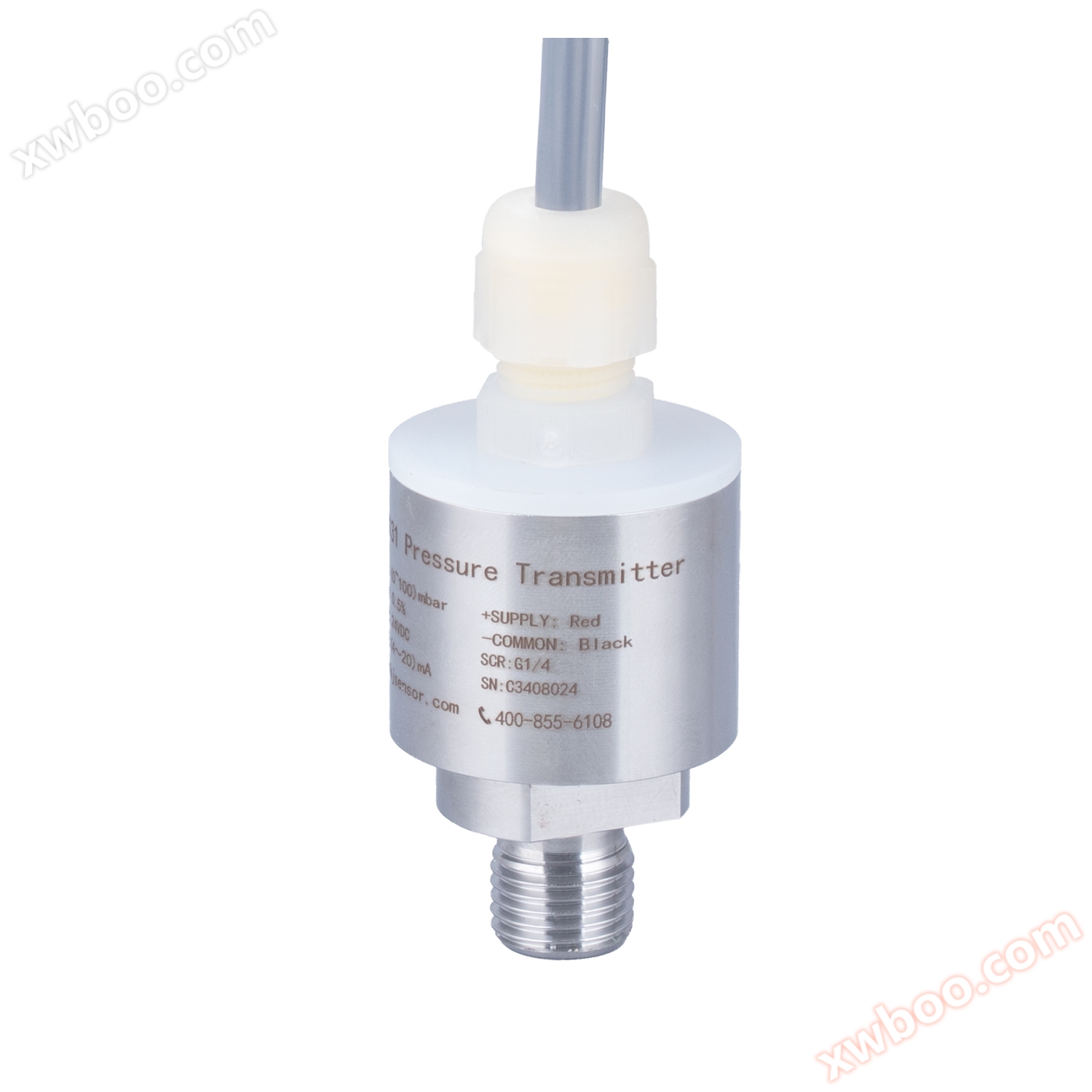
HPM131 pressure transmitter
Application areas: Industrial process control, wind pressure detection, scientific research and other fields
Product details
Product Details

The HPM131 pressure transmitter is specifically designed for measuring small pressure gases and can also conveniently measure liquid levels through a non-contact gas collection method. The product uses imported pressure sensors as signal measuring components and undergoes temperature compensation. The signal conditioning circuit is located inside a stainless steel casing and converts sensor signals into standard current signals for output. This product has a compact structure, easy installation, and is suitable for long-term use in small and harsh environments. It is widely used in industrial process control, liquid level measurement of open containers, and other occasions.

High precision, all stainless steel structure, diverse pressure interface forms, protection level IP65
◆ Reverse polarity protection and instantaneous overcurrent and overvoltage protection, in compliance with EMI protection requirements
◆ Wide measuring range, capable of measuring gauge pressure, absolute pressure, and sealed gauge pressure
◆ Zero point and full range adjustable
Strong anti-interference ability and good long-term stability

Measurement medium: Clean and dry gas compatible with 304 and 316L stainless steel
Range: 0~10, 20, 30, 40, 50kPa
Overload: 75kPa (0~10kPa), 200kPa (0~20... 50kPa)
Pressure type: gauge pressure
Accuracy: ± 1.0% FS
Long term stability: ± 1.0% FS/year
Temperature coefficient: ± 1.0% FS/℃ (0~10kPa), ± 2.0% FS (0~20... 50kPa), reference 25 ℃
Working temperature: 0~60 ℃
Storage temperature: -20~80 ℃
Power supply: 24VDC (10~30V)
Output signal: 4~20mADC
Output mode: Two line
Load resistance: ≤ (U-10)/0.02 Ω
Insulation resistance: 100M Ω, 500VDC
Shell protection: IP65
Vibration: 20g (20~5000Hz)
Electrical Connection: A specialized 6.0mm shielded air duct cable with a diameter of 1.5 meters
Shell: Stainless steel 1Cr18Ni9Ti
Weight: 150g

Cable type wiring method
| Wire color | Two limitationsmanufacture |
| Red | Power supply positive (+V) |
| Black | Negative power supply (OV/+OUT) |
| Blue | Grounding |


Installation prompt
1. The pressure transmitter cannot be installed in direct contact with liquids, and it is not recommended to install it vertically directly above the impulse pipe
2. If using the bubble method, the maximum air pressure should not exceed 70kPa. Adjust the airflow until approximately one bubble per second appears in the liquid in the open container, which is more suitable
3. The bubble method can prevent liquid from entering the pressure isolation tube, ensuring that the isolation tube is clean and preventing blockage; Clean and relatively cold gases can also ensure that the transmitter operates within a reasonable temperature range. Therefore, the bubble method has better linear characteristics under higher temperature conditions.


Online inquiry
-
Contacts
-
Company
-
Telephone
-
Email
-
WeChat
-
Verification Code
-
Message Content
-