VIP member
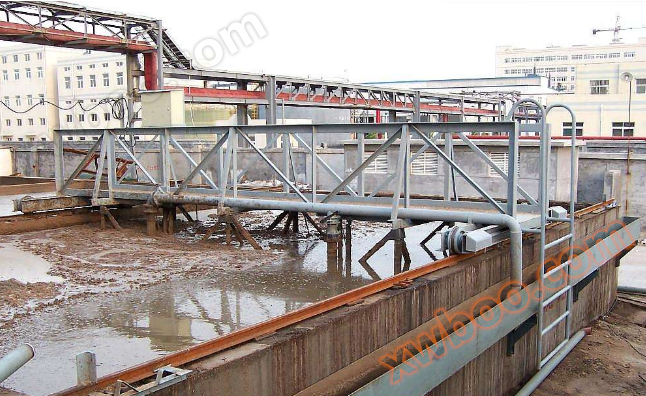
DM buried sewage treatment equipment
1、 Introduction to DM Underground Sewage Treatment Equipment DM type sewage treatment equipment is mainly used for the treatment of domestic sewage an
Product details
1、 Introduction to DM Underground Sewage Treatment Equipment
DM type sewage treatment equipment is mainly used for the treatment of domestic sewage and similar industrial organic wastewater. Its main treatment method is to use the currently mature biochemical treatment technology - biological contact oxidation method, and the water quality design parameters are calculated according to the general domestic sewage water quality design.
2、 Characteristics of DM buried sewage treatment equipment
1. Capable of treating comprehensive wastewater from living systems and similar organic wastewater.
2. The GRP structure buried machine has the advantages of light weight, corrosion resistance, aging resistance and long service life.
Note: Processing capacity of 1-2 tons/hour, using fiberglass structure, processing capacity of 2-10 tons/hour, using carbon steel anti-corrosion structure or stainless steel structure, processing capacity greater than 10 tons/hour, it is recommended to use concrete structure.
3. The complete set of equipment is simple to construct and easy to operate. All mechanical equipment is automatically controlled, and all devices are located below the surface.
4. Easy to manage and maintain, the equipment is equipped with a microcomputer fully automatic control system.
3、 Scope of application of DM buried sewage treatment equipment
1. Hotels, restaurants, sanatoriums, hospitals.
2. Residential communities, villages, and towns.
3. Stations, airports, seaports, and ship docks.
4. Factories, mines, troops, tourist attractions, scenic spots.
5. Various industrial organic wastewater similar to domestic sewage.
4、 Usage method of DM buried sewage treatment equipment
1. The equipment is generally buried underground, and the upper part of the equipment can be used as a green area, parking lot, road, etc.
2. The equipment can also be placed in a semi buried manner, and the burial depth can be determined according to the user's needs.
3. The equipment can also be placed above the outdoor ground surface.
4. If the device is used in cold regions, the inspection hole can be raised to bury the device below the frozen soil layer.
5. The device can be arranged according to the terrain requirements instead of the standard layout.
5、 Installation, use, and maintenance of DM buried sewage treatment equipment foundation
1. Foundation: If the equipment is placed above the floor, only a concrete floor with the same appearance as the equipment needs to be prepared as the foundation. The basic pressure must be greater than 4T/M2, and it is also required to be horizontal and flat.
If the equipment is buried below the floor, the foundation elevation must be less than or equal to the equipment elevation and ensure that there is no water accumulation during rain. The foundation is generally made of plain concrete (whether reinforcement is required depends on the local geological conditions). To prevent equipment from floating, anti floating rings should be pre embedded in the foundation.
2. Installation: Position according to the installation diagram, and place each box in sequence. The position and direction of the boxes must not be misplaced, and the spacing between them must be accurate, and the pipes must be connected properly. After the equipment is in place, use bandages to connect the equipment to the anti floating ring on the foundation to prevent the equipment from floating up.
3. Inject sewage into the equipment and check for any leaks in the pipes. If there are no leaks, inject clean water into the foundation to a depth of 30-50cm, covering the area around the box with soil until the equipment inspection hole is reached and the ground is leveled. Connect the control line of the electrical control cabinet to the water pump, and connect the electrical control cabinet to the power supply. When wiring, pay attention to the direction of the fan or aerator, which must be the same as the direction pointed by the fan or aerator.
4. Debugging: The sewage pump pumps sewage into the equipment according to the rated flow rate, starts the fan or aerator for aeration, and observes the filling situation in the contact tank every day. If an orange yellow or black film grows on the filling, this process usually takes 7-15 days. If it is industrial organic wastewater, it is recommended to first cultivate a biofilm with domestic sewage, and then gradually introduce industrial sewage for biofilm training.
5. Equipment maintenance: A regular maintenance system must be established for the equipment. The main vulnerable components are the fan, aerator, and water pump. The direction of the fan cannot be reversed. Once sewage enters the fan, it must be cleaned and the engine oil replaced before use.
Before starting the fan, it is necessary to pay attention to whether the air gate is open. The fan must be maintained every 10000 hours of operation. The water pump must be maintained every 5000-8000 hours of operation.
Online inquiry
-
Contacts
-
Company
-
Telephone
-
Email
-
WeChat
-
Verification Code
-
Message Content
-