
VIP member
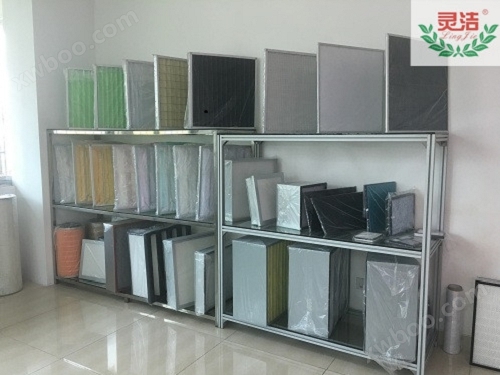
Clean room high-efficiency filter | Clean room high-efficiency filter
The high-efficiency filter in the clean room is a key component of the air purification system. Currently, the filter media used in China are ultra-fi
Product details
The high-efficiency filter in the clean room is a key component of the air purification system. Currently, the filter media used in China are ultra-fine glass fiber paper and ultra-fine asbestos fiber paper, which are used to filter industrial micron sized particles with a maximum content of less than 1 μ m that cannot be filtered by coarse and medium efficiency filters, ensuring the cleanliness requirements of the clean room. To ensure the filtration efficiency of the filter and the cleanliness of the clean system, the installation of high-efficiency filters must comply with the requirements of the "Construction and Acceptance Specification" or design drawings.
1、 Preparation work before installing high-efficiency filters in dust-free workshops
To prevent contamination of the high-efficiency filter, it must be inspected and installed after the air purification system has been installed, the air conditioner, high-efficiency filter box, air duct, and clean room have been cleaned, and the individual equipment of the air conditioning system has been tested and the amount of dust blown out of the air duct has stabilized before ice can be added.

Before installation, it is necessary to check the flatness of the filter frame or edge end face, and the allowable deviation of the end face flatness should not exceed 1mm. If the end face flatness exceeds the allowable deviation, only the frame end face of the filter installation can be modified or adjusted, and the outer frame of the filter itself cannot be modified, otherwise it will damage the filter material or sealing part in the filter, and reduce the filtering effect.
II Installation requirements for high-efficiency filters in dust-free workshops
When installing the high-efficiency filter, it should be ensured that the airflow direction is consistent with the direction indicated by the arrow on the outer frame. When installing a high-efficiency filter assembled with corrugated plates vertically, the corrugated plates must be perpendicular to the ground and not reversed. The sealing of high-efficiency filters and the framework for assembling high-efficiency filters generally adopts two methods: top tightening and compression. For clean systems with strict cleanliness requirements of level 5 or above, some use knife holder type high-efficiency filter liquid tank sealing devices.
1. The installation characteristics of the top tightening method and the compression method include the ability to install and replace high-efficiency filters in a dust-free workshop. The compression method can only install and replace high-efficiency filters in suspended ceilings or technical interlayers. During installation, the filter should be handled gently to prevent contamination and should not be knocked or impacted with tools. It is strictly prohibited to touch the filter paper with hands or tools to prevent damage to the filter material and sealant.
The sealing between the filter and the frame is generally achieved by using closed cell sponge rubber sheets or chloroprene rubber sheets, or by applying silicone rubber for sealing. The thickness of the sealing gasket is usually 6-8mm, and it is positioned and pasted on the filter frame. The compression rate after installation should be between 25% and 30%. The splicing method of the sealing gasket material is alternated with the splicing method of the flange connection gasket material of the air purification system duct, that is, trapezoidal or mortise and tenon splicing is used.
When using a double ring seal for sealing the filter and frame, do not block the holes on the ring cavity. Both double ring sealing and negative pressure sealing must keep the negative pressure pipeline unobstructed. http://www.hnjhgc.com To improve the sealing effect of the "sealing and guiding" combination, if there are no design requirements, for filters with a side length of less than 484mm, one hole should be opened on one side, and holes should be opened on 1-2 sides; Filters with a side length of less than 630mm should have one hole on one side and two holes on both sides; Filters with a side length of 630mm or more should have two holes on one side.
If silicone rubber is used as the sealing material for the filter and frame, in order to ensure good sealing, before applying silicone rubber, the impurities and oil stains on the filter and frame should be cleaned first, and then the chain rubber should be fully and evenly applied.
2. The installation of liquid tank seal is a sealing method developed to improve the cleanliness of dust-free workshops. It overcomes the shortcomings of the compression method, such as poor flatness of the frame end face, poor sealing of the filter, aging and leakage of the sealing cushion layer, and long replacement and disassembly cycles. The device for sealing the liquid tank is made of aluminum alloy plates pressed into two-way, three-way, and four-way groove connectors, which are connected and assembled together with screws. Sealed with non Newtonian sealing fluid in the form of sealant, suitable for vertical unidirectional flow. The non Newtonian sealing liquid in the liquid tank is an inert liquid that is non-volatile, non oil climbing, non corrosive, acid and alkali resistant, non-toxic, has certain fluidity, good dielectric properties, and stable electrical insulation properties. Dip the knife holder type high-efficiency filter into the sealing groove.
During the installation process, there may be deviations in elevation and unevenness in the lifting and connection of the skeleton components, and it should be as smooth as possible. In order to ensure the smooth installation of the high-efficiency filter holder in a limited space, the plane accuracy requires that the deviation of the longitudinal and transverse centerlines of the liquid tank after it is in place should not exceed 5mm; and the height difference of the longitudinal and transverse centerlines of the liquid tank in the vertical direction should not exceed 3mm, to prevent the liquid tank system from running to the maximum liquid level difference, which may cause the bottom of the liquid tank to bubble and leak air or local liquid overflow. After connecting the frame liquid tank, silicone rubber or epoxy resin adhesive and other sealants should be used to seal all joint gaps. Then, heat the sealing liquid in a water bath to around 80 ℃ to dissolve it, and quickly inject it into the tank to the designed depth. After the sealing liquid condenses, the high-efficiency filter can be installed.
When installing the filter, the tool holder should avoid contact with the groove wall to prevent the formation of a leakage boundary; The knife holder should be gently inserted into the liquid tank for sealing. Generally, operators should place the filter on the frame from above, or according to the external dimensions of the filter, they can tilt the filter through the liquid tank from below and then align and place it. If the installed filter needs to be moved, you can lift it up and then gently lower it into the slot. Do not forcefully push the installed filter to prevent liquid overflow or damage to the filter. When replacing the filter, the support plate should be prepared in advance. When the filter holder is taken out of the liquid tank, the support plate should be immediately placed under the filter to prevent the liquid attached to the holder from dripping into the clean room or contaminating the installed filter.
Online inquiry
-
Contacts
-
Company
-
Telephone
-
Email
-
WeChat
-
Verification Code
-
Message Content
-