
VIP member
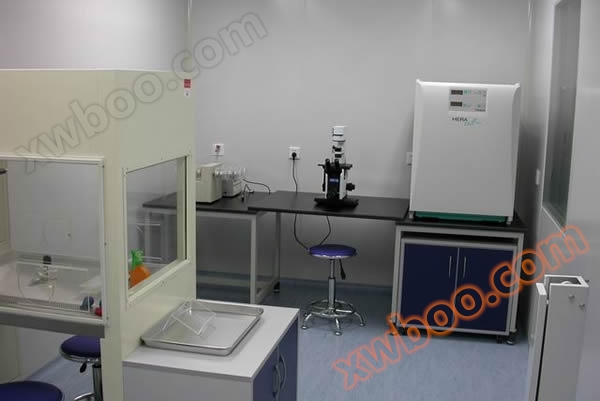
Biosafety Laboratory Design
Overview of Biosafety Laboratories 1. Laboratories used for research in microbiology, biomedicine, biochemistry, animal experiments, genetic recombina
Product details
(1) Classification of Biosafety Laboratories


Note: 1. "/" in the table indicates no requirement. The noise in this table does not include the noise of biological safety cabinets and animal isolators. If the noise of the above equipment is included, the maximum should not exceed 68dB (A).
2. The minimum negative pressure of the third level biosafety main laboratory relative to the atmosphere shall not be less than -30Pa, and the minimum negative pressure of the fourth level biosafety main laboratory relative to the atmosphere shall not be less than -50Pa.
3. For the third level biosafety main laboratory that raises animals, the minimum negative pressure relative to the atmosphere shall not be less than -50Pa, and for the fourth level biosafety main laboratory that raises animals, the minimum negative pressure relative to the atmosphere shall not be less than -60Pa.
4. The parameters of the animal biosafety laboratory should comply with the relevant requirements of GB14925-2001 "Experimental Animal Environment and Facilities".
(2) Components of the Biosafety Laboratory Construction Plan
The construction plan for a biosafety laboratory includes various aspects such as building layout and decoration, air conditioning, water supply and drainage, gas supply, electrical design, centralized control, security, construction technology, testing, and training. In particular, the following aspects of the plan should be fully considered:
1. Architectural layout and decoration plan: It is the foundation for the safe operation of biosafety laboratories. Due to the danger of microbial pathogens, it is necessary to prevent the spread of dangerous microorganisms to the outside world, comprehensively block the contact pathways between dangerous microorganisms and the external environment, and avoid microbial contamination from the outside, which may affect the accuracy of experimental results
Accuracy requires adopting a reasonable laboratory layout and decoration plan. The laboratory layout is reasonably divided into clean areas, semi polluted areas, and polluted areas according to safety requirements. Special passages are set up for people and objects, necessary buffer rooms are set up, and measures such as primary and secondary isolation are adopted to effectively avoid cross contamination
Dyeing fundamentally prevents the spread of dangerous microorganisms; The laboratory decoration adopts reliable materials and reasonable construction measures to ensure that the biosafety laboratory is always in a relatively sealed environment, preventing the escape of microorganisms, easy to clean and disinfect the laboratory, and avoiding external damage to the laboratory environment.
2. Air conditioning system: It is the key to the safe operation of biosafety laboratories. Due to the hazardous microorganisms that pose a danger to human beings, animals, plants, or the environment, it is necessary to maintain a relatively negative pressure environment in the biosafety laboratory at all times by using a reasonable air conditioning system
All are not destroyed to ensure that hazardous microorganisms in the laboratory cannot spread to the external environment. The air conditioning system must operate reliably, adopt advanced technology, make rational use of and save energy and resources, ensure the quality and safety of the environment, provide the necessary temperature and humidity for experimental personnel, and ensure the biological experiment is conducted in a safe and reliable manner
Under safe conditions to ensure the accuracy of experimental results. At the same time, it must also control the cleanliness of the laboratory and filter the fresh air to meet certain purification requirements. The exhaust system is a key focus, playing an important role in ensuring a relatively negative pressure environment in the laboratory and effectively filtering indoor pollution exhaust
effect.
3. Control system: It is the central nervous system for the safe operation of the entire biosafety laboratory. Due to the fact that the experimental subjects of the biosafety laboratory are hazardous microorganisms, and based on the principle of strict pollution control, it requires the use of minimal maintenance personnel and optimized management and maintenance methods to monitor each laboratory in real time
The physical environment in which the equipment is located ensures that the laboratory operates in a relatively negative pressure environment to prevent the leakage of hazardous microorganisms.
4. Testing plan: It is the guarantee for the long-term safe operation of the biosafety laboratory. Due to the special nature of biosafety laboratories, in addition to strict design, construction, and commissioning, necessary engineering testing and strict acceptance must be carried out to ensure their safety. Only after meeting safety and usage requirements can they be put into use
Enter into operation. In addition, some factors during use, such as non professional management and use, replacement of high-efficiency filters, etc., can have an impact on the safety of the laboratory. Therefore, regular testing during use is equally important.
5. Training program: As the experimental personnel in biosafety laboratories are usually medical experts, they may not have a complete understanding of the principles of the entire laboratory system. Through the training program, all laboratory staff can understand the characteristics of the entire system, master its operating rules, and discover safety hazards in a timely manner
Making corresponding emergency measures to control the further deterioration of the situation is of great help in reducing the difficulty of subsequent maintenance work.
(3) Characteristics and requirements of biosafety laboratory
The overall solution for biosafety laboratory should be different from general laboratory engineering or purification engineering according to the safety and usage requirements of the laboratory. From the perspective of our company's own characteristics, relying on a deep understanding of user needs, a team of skilled consultants and experts in engineering design and construction, and advanced regulations
We have developed a comprehensive biosafety laboratory solution based on our operational philosophy and established good cooperative relationships with internationally renowned brand suppliers. It has the characteristics of high security, specialization, integrity, modularity, standardization, etc.:
1. High security: Unified coordination of various equipment suppliers, engineering contractors, and service providers, coordinating multiple links and partners related to the entire biosafety laboratory construction process. The entire construction process of the biosafety laboratory is carried out under the overall arrangement of the company, unifying various aspects
The opinions from various parties have eliminated the drawbacks of inconsistent opinions leading to separate evidence in the design and construction process, resulting in safety hazards and rework during the construction process, ensuring the tightness of the biosafety laboratory and enabling its long-term safe operation.
2. Specialization: The company has years of experience in serving industry users and is managed through unified coordination. From early planning and site selection, mid-term design and construction, later commissioning and operation, to lifelong maintenance services, the company provides professional expert services in biosafety laboratory engineering design and construction, as well as experienced project management personnel
Standardized processes and large-scale operations allow users to fully experience the unique advantages of being a professional company with consistent high quality and system configuration, overall implementation, and expert services. Ensure that users' biosafety laboratories meet the national standards for computer rooms in terms of building decoration, electrical equipment, fire safety, and other aspects
Standard specifications.
3. Integrity: The "Integrated Biosafety Laboratory" provides customers with a one-stop "turnkey" project, reducing procurement costs and minimizing customers' investment in energy, materials, and manpower. Customers do not need to consider too many technical details. With a comprehensive biosafety laboratory solution, it's like
The customer provides a unified interface that integrates all equipment suppliers, engineering contractors, and service providers together, systematically configuring equipment to ensure the capacity and equipment compatibility of the entire biosafety laboratory, meeting current and future development needs. In addition, provide users with permanent contracts
The customized service ensures that users receive long-term or even lifelong service maintenance, fully guaranteeing the maximum benefit of customer investment.
4. Modularization: When designing solutions for users of biosafety laboratories, industrial and standardized operating concepts are adopted to summarize and organize years of purification engineering projects. This involves modularizing complex biosafety laboratory projects, making it easier to appropriately adapt to users' different situations, characteristics, and needs
A more optimized combination. Adopting a tailored approach in the provided plan, standardizing building decoration, power distribution, air conditioning, and fire protection, and developing targeted design plans.
5. Standardization: The overall biosafety laboratory plan is organized, designed, and constructed by Expansion Technology Company. All plan design, equipment and material procurement, construction project management, and quality supervision services are provided by the company's project design and project management personnel. As the overall biosafety laboratory
We hope to achieve standardized design of the design plan, adopt consistent design concepts, and achieve consistency in style and quality.
(5) What are the differences in design and facility requirements between BSL-2 and BSL-1?
The safety equipment and facilities of BSL-2 laboratory are suitable for operating pathogenic microorganisms classified as Class III (a small amount of Class II) in China. The ways in which staff may be exposed to infectious substances in such laboratories include skin or mucous membrane damage, injury from contaminated needles or sharp objects, and exposure of respiratory tract or mucous membranes to infectious substances
Aerosols or splashes, etc. The BSL-2 laboratory is built upon the foundation of the BSL-1 laboratory by adding safety equipment such as biosafety cabinets, high-pressure sterilizers, eye wash stations, and face shields.
In the design and facilities of BSL-2 laboratory, the following content should be added on the basis of meeting BSL-1 laboratory facilities:
The laboratory door should be able to close automatically and have a visible window.
2. There are appropriate fire alarms.
3. The laboratory does not require special ventilation equipment. The newly built BSL-2 laboratory may consider installing a ventilation system to allow air to flow inward without circulation. If there is no ventilation system, the laboratory windows should be able to open and insect proof screens should be installed.
4. There is a reliable power supply and emergency lighting. When necessary, important equipment such as incubators, biosafety cabinets, refrigerators, etc. should be powered by electricity. The laboratory exit should have clearly identifiable markings in the dark.
5. There should be sufficient storage space to place items for easy use. There should also be storage space for long-term use outside the laboratory work area.
6. There should be conditions for storing personal clothing outside the laboratory work area.
Online inquiry
-
Contacts
-
Company
-
Telephone
-
Email
-
WeChat
-
Verification Code
-
Message Content
-