
VIP member
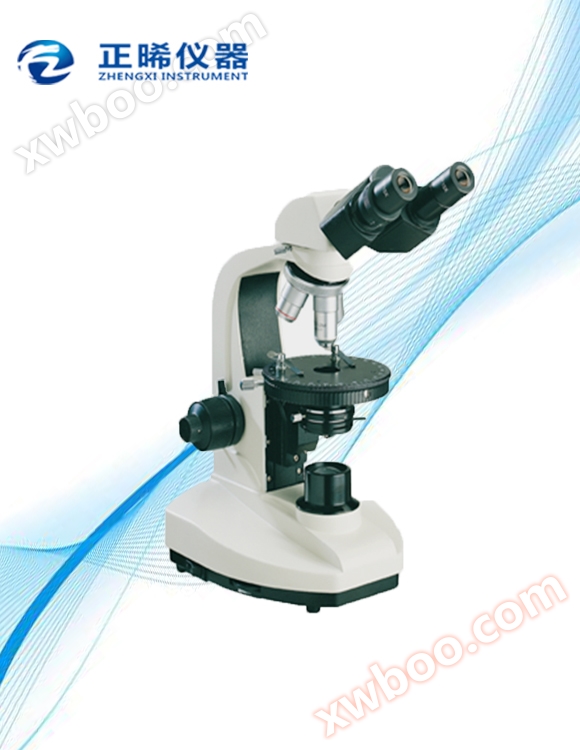
Binocular polarizing microscope ZXPM-250
Binocular polarizing microscope is a commonly used instrument for studying and identifying substances with birefringence by utilizing the polarization
Product details
Binocular polarizing microscope is a commonly used instrument for studying and identifying substances with birefringence by utilizing the polarization characteristics of light. The binocular polarizing microscope has a wide range of applications, such as observing the crystalline contents of teeth, bones, hair, and living cells, analyzing the structural details of animal muscles and plant fibers, and analyzing the denaturation process. It is also possible to observe the crystal structure of various salts in inorganic chemistry, which is not visible under natural light.
Performance Characteristics
▲ Equipped with large field eyepiece and achromatic objective lens, the field of view is large and clear;
▲ Coarse micro motion coaxial focusing mechanism, adjustable coarse motion tightness, with limit locking device, micro motion grid value: 2 μ m;
▲ 6V20W halogen lamp transmission illumination, adjustable brightness;
Standard configuration
model |
WMP-6102 binocular polarizing microscope |
eyepiece |
Wide field of view WF10X (Φ 18mm) |
objective lens |
Achromatic objective lens 4X/0.10 |
Achromatic objective lens 10X/0.25 | |
Achromatic objective lens 40X/0.65 (spring) | |
Achromatic objective lens 100X/1.25 (spring, oil) | |
Eyepiece tube |
Binocular, tilted at 30 degrees |
analyzer |
Push pull Sliding |
focusing mechanism |
Coarse micro coaxial focusing, micro grid value: 2 μ m, with locking and limiting devices |
converter |
Four holes (inward ball positioning) |
Carrier platform |
Rotating stage (diameter: Φ 120mm) |
Abbe spotlight |
NA.1.25 can be raised and lowered up and down |
color filter |
Blue filter |
frosted glass | |
polarizer |
Can rotate 360 degrees |
Concentrator |
Suitable for halogen lamp lighting |
lighting system |
6V 20W halogen lamp, adjustable brightness |
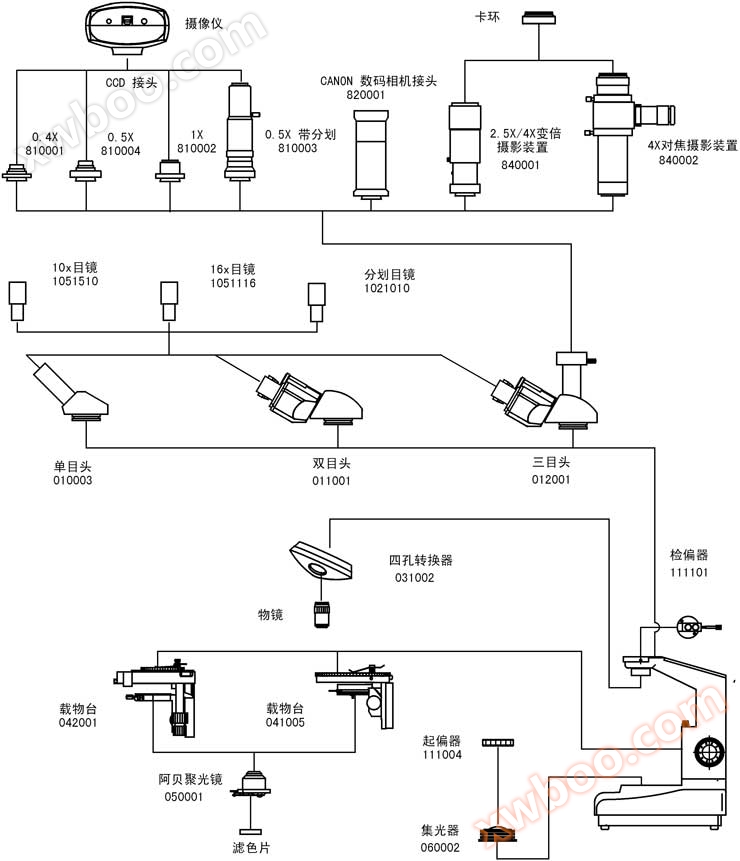

Online inquiry
-
Contacts
-
Company
-
Telephone
-
Email
-
WeChat
-
Verification Code
-
Message Content
-