
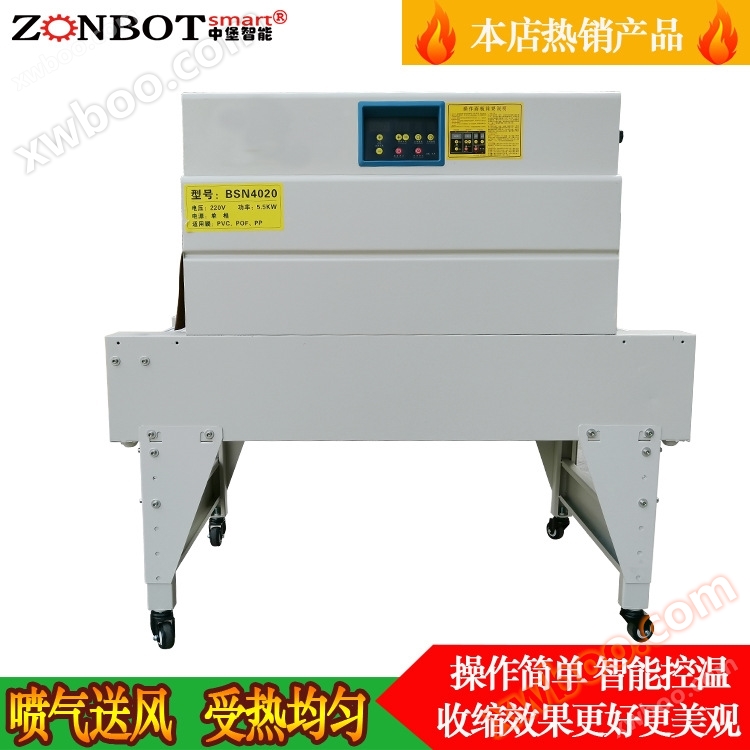
Thermal shrinkage is a physical phenomenon that refers to the change in size and surface area of certain materials when heated.
The phenomenon of thermal shrinkage has important applications in many fields. For example, in the packaging industry, heat shrink films and machines with heat shrink properties can efficiently and tightly package various products.
Heat shrink film is usually made of special polymer materials such as polyethylene (PE), polyvinyl chloride (PVC), etc. When these films are heated to a certain temperature, the molecular chains will rearrange, causing the films to shrink.
The degree and speed of thermal shrinkage depend on factors such as the properties of the material, heating temperature, and time. Different materials have different thermal shrinkage rates, which allows for the selection of suitable materials according to specific needs in practical applications.
In the wire and cable industry, heat shrink tubing is widely used for insulation and protection of wire joints. When heating the sleeve, it will tightly wrap around the wire joint, providing good insulation and protection.
In the field of construction, some pipeline connections are also sealed and protected with heat shrinkable tape. By heating, the heat shrinkable tape is tightly adhered to the surface of the pipeline to prevent leakage and corrosion.
For example, in electronic device manufacturing, some precision components are fixed and protected using heat shrink packaging to prevent damage during transportation and use.
Heat shrink technology not only improves the packaging and protective effect of products, but also has the advantages of easy operation and relatively low cost.
With the continuous development of materials science and technology, the performance of heat shrinkable materials is constantly optimized, and the application fields of heat shrinkable materials are also constantly expanding and innovating


