
VIP member
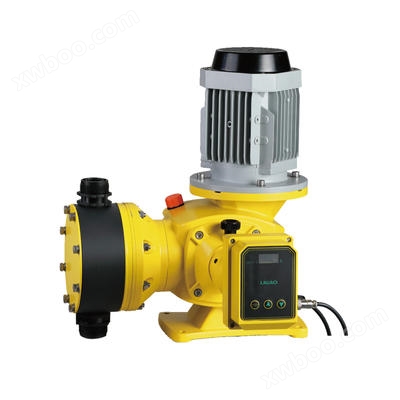
Automatic stroke controller for metering pump
Automatic stroke controller for metering pump
Product details
The metering pump is a reciprocating positive displacement pump, and the flow can be manually adjusted. However, with the progress of industry, people's demand for automated products is increasing. Not only reliable flow regulation stability is required, but also automatic control can be achieved. This not only puts forward higher requirements for awesome, but also for all modern companies. The electric stroke controller produced by Powerco effectively solves this problem, which enables the metering pump to achieve automatic control. People can directly control the flow rate of the metering pump in the control room, greatly improving the efficiency and convenience of industrial work nowadays.
The automatic stroke controller of LiGao metering pump solves the problem of remote transmission of metering pump signals. It can digitally adjust the rated flow of the corresponding metering pump from 0-100%. It is directly installed on the mechanical adjustment handwheel of the metering pump, which can achieve the transition from manual adjustment mode to automatic control adjustment mode. The automatic stroke controller of the LiGao metering pump is powered by single-phase 80-280V and the control signal is 4-20mA, which can be matched with the LiGao metering pump.
The automatic flow regulation of the metering pump is divided into two modes: one is electric stroke control, which automatically controls the stroke length of the metering pump, and the other is the variable frequency controller. Among them, variable frequency control has certain drawbacks, that is, the metering pump needs to replace the variable frequency motor, and if the frequency is lower than 30% for a long time, it will cause the motor to heat up, affecting the performance of the metering pump and even causing motor burning. The electric stroke control solves this problem by keeping the motor speed constant and directly adjusting the stroke length of the metering pump to achieve 0-100% flow regulation. And frequency conversion control adjusts the flow rate by adjusting the motor speed to change the number of strokes. When the frequency decreases, the number of strokes decreases, and the reciprocating pulse of the metering pump will increase, which will cause pipeline shaking and inaccurate self-control flow. However, automatic stroke controllers do not change the number of strokes and use automatic adjustment instead of mechanical handwheels, resulting in higher linear accuracy of the metering pump flow rate.
Working principle
The automatic stroke controller of the metering pump converts the input 4-20mA signal into a motor rotation control signal through MCU (microcontroller unit) processing, adjusts the corresponding number of rotations of the mechanical handwheel to adjust the stroke length, and achieves automatic adjustment of flow rate from 0-100%. The control core is MCU, and all data is input to MCU for processing and output. The MCU receives a set input signal, detects the rotational position of the motor, compares the input signal with the motor position signal until they are equal, and outputs a signal to control the motor rotation. At the same time, the MCU outputs feedback signals and display values, and through the input of the SET and navigation keys, the MCU converts percentages into flow values through calculations. MCU can also monitor input signals in real time, and when the input exceeds 20mA, the operation of the automatic stroke controller will be stopped.
Advantages of Automatic Stroke Controller
Highly integrated, saving operation and maintenance costs.
No external auxiliary control devices are required.
It can achieve automatic control and adjustment mode.
Automatic position feedback after adjustment.
It can perfectly replace variable frequency regulation, with smaller metering pump pulses and higher flow accuracy.
Replacing the automatic stroke adjustment of mechanical handwheels, the metering pump has high linear accuracy.
Large screen display with set percentage, actual percentage, and simulated flow display.
Online inquiry
-
Contacts
-
Company
-
Telephone
-
Email
-
WeChat
-
Verification Code
-
Message Content
-